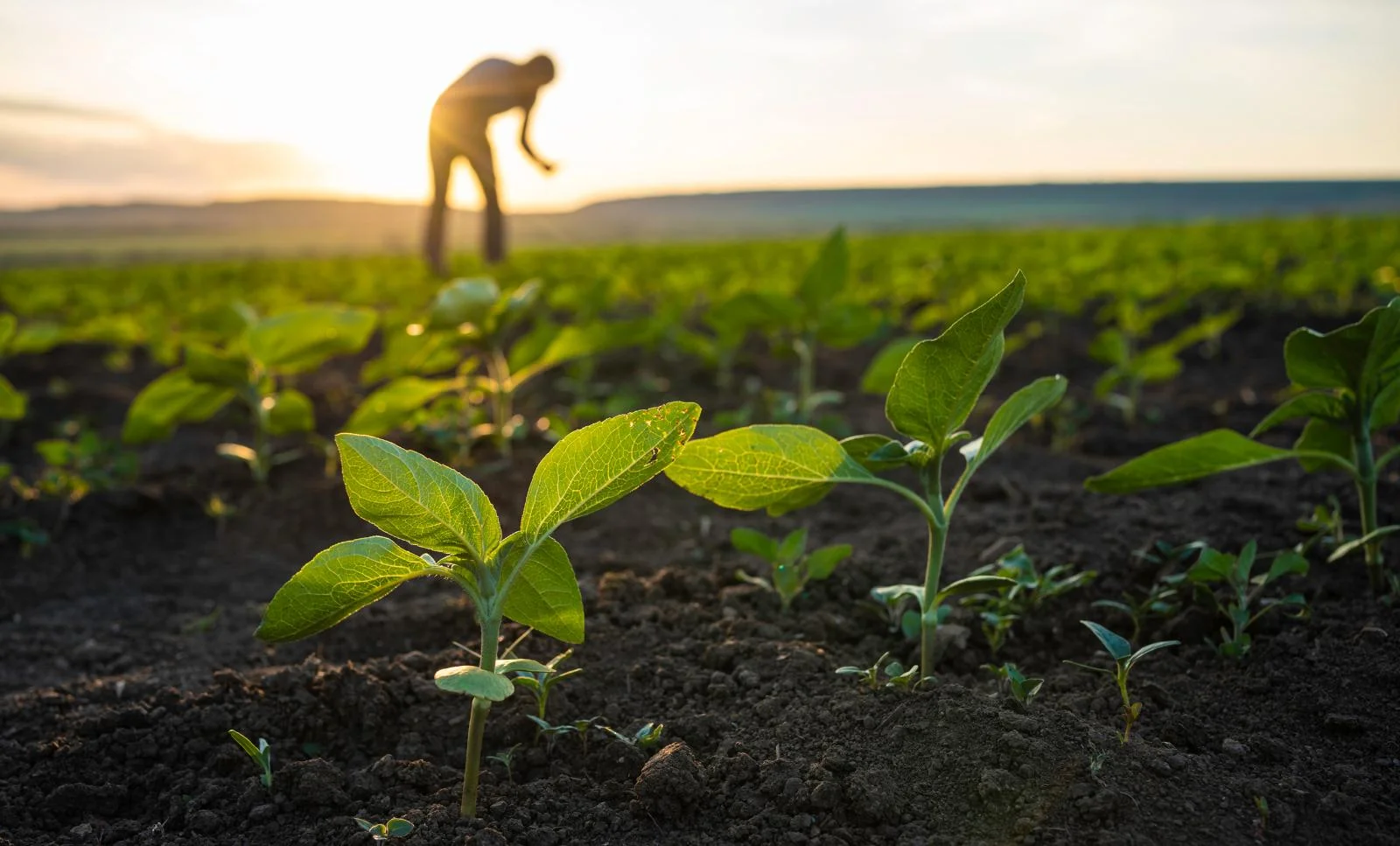
Vietnamese agriculture is facing a serious challenge: land degradation. According to the General Statistics Office, more than 60% of cultivated land area in the delta provinces has experienced reduced fertility, while soil organic matter levels have fallen below the minimum threshold of 2%. The overuse of chemical fertilizers and pesticides not only depletes the soil but also pollutes groundwater. In this context, biochar - also known as biochar - is emerging as a breakthrough solution, combining ancient wisdom with modern technology to restore soil health. This article will help you understand what biochar is, why it is regarded as a sustainable solution, and how to apply it effectively in Vietnamese agricultural practice.
What is biochar? Definition and origins
The concept of biochar (biological charcoal) and its composition
Biochar is a biochar product created from the pyrolysis of plant biomass under low-oxygen or oxygen-free conditions. Unlike ordinary charcoal used for burning, biochar has a uniquely porous structure with millions of tiny pores, producing an extremely large surface area — up to 300–500 m² per gram.
The main components of biochar include carbon (accounting for 70–85%), along with trace elements such as nitrogen, phosphorus, potassium, and other minerals depending on the original feedstock. This porous structure not only helps retain water but also creates an ideal environment for beneficial microorganisms to live and thrive.
Differences between biochar, regular charcoal, and compost
To better understand biochar, see the comparison table below:
Biochar vs Regular charcoal vs Compost:
- Biochar: Produced at temperatures of 400-700°C in low-oxygen conditions; a stable porous structure; contains 70-85% carbon; persists in soil for hundreds of years; neutral to mildly alkaline pH.
- Conventional charcoal: Produced by complete combustion with oxygen; dense structure with few pores; primarily pure carbon; more easily degraded; not optimal for soil.
- Compost: Naturally biodegradable; contains a high amount of readily decomposable organic matter; 30-50% carbon; breaks down in 1-3 years; rich in immediately available nutrients.
What sets biochar apart is its ability to persist long-term in soil, providing durable soil improvement rather than just temporary nutrient addition like compost.
History: From Amazonian Terra Preta to modern research
Biochar is not a new invention. Over 2,000 years ago, the indigenous peoples of the Amazon created Terra Preta (black earth) — an extremely fertile soil created by mixing wood biochar with organic waste. To this day, Terra Preta areas retain fertility far superior to the surrounding soils.
From the early 21st century, modern scientists began studying and recreating this technique. In 2006, the term biochar was officially coined to distinguish it from conventional charcoal, marking the start of the global movement to apply biochar in sustainable agriculture and carbon emissions reduction.
Biochar production process via pyrolysis
The production of biochar takes place in a pyrolysis furnace at temperatures of 400-700°C in an oxygen-limited environment. Biomass (such as rice husks, hulls, sawdust) is heated slowly, not fully combusted. This process breaks down the plant cell structure, releases gases and bio-oils, leaving behind the solid residue known as biochar.
Modern technology allows precise control of temperature and time, producing biochar with desired properties. In Vietnam, many small-scale pyrolysis furnace models have been developed, suitable for smallholders and cooperatives, helping to recycle agricultural residues on-site.
Why is biochar a sustainable solution for soil?
Improves soil structure and water retention
The porous structure of biochar acts like a "sponge" in the soil. Research at Hanoi University of Agriculture shows that applying 5-10 tonnes of biochar per hectare can increase the soil's water-holding capacity by 15-20%This is especially important for sandy soils or during dry seasons.
When biochar is mixed into soil, it creates micropores, improving aeration and drainage. The soil becomes more porous, roots develop more easily, and the risk of waterlogging or erosion is significantly reduced. Rice farmers in the Mekong Delta report a 30% reduction in irrigation water after applying biochar.
Enhances nutrient retention (CEC)
Cation exchange capacity (CEC) is an indicator that measures the soil's ability to retain and supply nutrients to plants. Biochar has a high CEC due to its large surface area and functional groups on the surface of the char.
When fertilizing, instead of being washed away by rain or irrigation, nutrient ions such as NH4+, K+, Ca2+, Mg2+ are 'captured' by biochar and released slowly according to the plant's needs. This helps:
- Reduce fertilizer requirements by 25-40% (according to research by the Institute of Soil and Fertilizer)
- Avoid waste and groundwater pollution caused by excess fertilizer
- Maintain stable soil fertility over the long term
Stimulate beneficial microbial activity in the soil
The porous pores in biochar are an ideal 'home' for billions of beneficial microorganisms. They are sheltered from harsh external conditions and have a stable environment in which to live.
Research shows that soil with biochar has the density of nitrogen-fixing bacteria increases by 200-300% and mycorrhizal fungi (mycorrhizae) grow by over 40%. These microorganisms help:
- Decompose organic matter, releasing nutrients
- Fix nitrogen from the air
- Produce growth-promoting hormones
- Protect plants from soil-borne pathogens
Sequester carbon and reduce greenhouse gas emissions
This is the most important environmental benefit of biochar. When biomass decomposes naturally or is burned, carbon is released into the atmosphere as CO2. But when converted into biochar, 70-80% of the carbon is 'locked' into the stable charcoal structure, which can persist in the soil for hundreds to thousands of years.
One ton of biochar can sequester about 2.5-3 tons of CO2. If Vietnam converts 20% of its annual agricultural residues into biochar, we could sequester more than 5 million tons of CO2 per year - equivalent to planting an additional 200 million trees.
Moreover, biochar also reduces emissions of methane (CH4) and nitrous oxide (N2O) from soil - two greenhouse gases that are many times more potent than CO2.
Reducing fertilizer leaching and water pollution
In Vietnam, fertilizer leaching that causes eutrophication of rivers and lakes is becoming increasingly serious. Biochar helps retain nitrogen and phosphorus in the root zone, significantly reducing nutrient losses.
Trials in the Central Highlands coffee-growing region show that biochar reduces 45% of nitrate leaching into groundwater. This not only protects the environment but also saves farmers money on fertilizer.
Economic and environmental benefits of using biochar
Increased crop yields: Data from field studies
The effectiveness of biochar has been demonstrated by numerous field studies in Vietnam:
- Rice: Increases yields by 12-18% (Mekong Delta)
- Coffee: Increases yields by 15-22%, improves bean quality (Central Highlands)
- Vegetables: Increases yields by 20-35%, reduces wilt disease (Da Lat)
- Pepper: Promotes stem growth by over 25%, reduces rapid decline disease (Dong Nai)
Notably, the effect increases over time. In the first year yields may increase by 10-15%, but from the 2nd-3rd year onward, when the biochar is fully "activated" and microorganisms are stably established, yields can increase by 20-30%.
Savings on fertilizer and irrigation costs
Economic analyses show clear benefits:
- Reduce fertilizer costs by 25-40% thanks to increased use efficiency
- Reduce irrigation costs by 20-30% because the soil retains water better
- Reduce pesticide costs by 15-20% thanks to healthier crops
With an initial investment of about 15–20 million VND/ha (buying or producing biochar themselves), farmers can recoup their investment in 1.5–2 years. From the third year onward, this becomes a substantial additional net profit.
Recycling agricultural waste into resources
Vietnam produces annually:
- 15–18 million tons of straw and stubble
- 6–7 million tons of rice husk
- 2–3 million tons of bagasse
- 1–2 million tons of coffee husk
Currently, most is burned or discarded into the environment, causing pollution and waste. Converting it into biochar not only solves the waste problem but also creates a high-value economic product.
Some cooperatives have set up collection models for residues and centralized biochar production, creating additional jobs and income for communities.
Contributing to the circular economy and carbon-negative agriculture
Biochar is a prime example of the circular economy: waste becomes input for new production cycles. Moreover, agriculture using biochar can become "carbon-negative" - absorbs more CO2 than is emitted.
In the context of a developing carbon market, farmers adopting biochar can benefit from carbon credit programs. Some pilot projects in Vietnam are paying farmers USD 5–10 per ton of CO2 (fixed).
Types of feedstock suitable for producing biochar in Vietnam
Agricultural by-products: rice husks, rice hulls, bagasse, coffee husks
Rice husks and rice hulls are the most common feedstock, available in all rice-growing areas. Biochar from rice husks has a high silica content, particularly good for rice and vegetable crops. Conversion rate: 1 ton of rice husks yields about 300-350 kg of biochar.
Bagasse after juice extraction it has good porosity, producing high-quality biochar with high CEC. Suitable for sugarcane-growing areas in the Central and Southern regions.
Coffee husks rich in potassium and trace elements, biochar from coffee husks is very good for fruit trees and industrial crops. The Central Highlands has abundant supplies of this feedstock.
Forestry waste and wood residues
Sawdust, pruned branches, and wood residues from furniture processing can all be used to make biochar. Biochar from hardwood has a stable porous structure and persists longer in soil, but requires higher temperatures (600-700°C) for complete pyrolysis.
Criteria for selecting quality feedstock
Good feedstock should meet:
- Free of harmful chemicals: Avoid painted wood, chemically treated wood, plastics
- Low moisture content (below 20%): Saves energy during pyrolysis
- High carbon content: Wood and hard shells are better than leaves and grasses
- Free of soil and sand: Reduces biochar quality
Feedstock to avoid and common mistakes
Absolutely do not use:
- Household waste, plastics, rubber
- Chemically treated wood (pallets, termite-resistant wood)
- Uncomposted animal manure (causes odors, pathogenic bacteria)
- Poisonous plants (some wild species)
Common mistakes:
- Uncontrolled open-air burning → low-quality charcoal
- Using ordinary charcoal instead of biochar → low effectiveness
- Not activating biochar before application → absorbs nutrients from the soil
Guide to using biochar effectively for soil
Recommended dosages for each crop type
Dosage depends on soil type and crop:
Rice, corn, staple crops:
- Fertile soil: 3-5 tons/ha
- Poor soil: 5-8 tons/ha
Vegetables, short-duration crops:
- 5-10 tons/ha or 1-2 kg/m²
Fruit trees, industrial crops:
- 10-15 tons/ha (applied as a basal dressing at planting)
- 2-5 kg per tree for established plants
Ornamental plants, potted plants:
- 10-20% of the potting mix by volume
Note: Start with a lower dose (50-70% of the recommendation) in the first year to observe. You can add more in subsequent years.
Methods to activate biochar before application (charging)
This is an EXTREMELY IMPORTANT step that many people skip. Newly produced biochar has an "empty" surface; if applied directly it will absorb nutrients from the soil, causing nutrient deficiency for plants in the first 2-3 months.
Simple activation methods:
- Soak with diluted urine (dilute 1:5 with water) for 1-2 weeks
- Mix with compost at a 1:1 ratio, keep moist for 2-4 weeks
- Soak in organic fertilizer solution (biofertilizer, vermicompost) for 1 week
- Mix with well-rotted manure At a 1:2 ratio, let sit for 2-3 weeks
After activation, biochar will be "loaded" with nutrients and microorganisms, ready to nourish plants as soon as it is applied.
How to blend biochar with compost and organic fertilizer
Optimal mix:
- 40% activated biochar
- 40% compost or organic fertilizer
- 20% garden soil
Mix thoroughly, moisten moderately, and compost for another 1–2 weeks before use. This mixture provides immediate nutrients (from the compost) and long-term soil improvement (from the biochar).
Timing and techniques for applying biochar to soil
Best timing:
- Before planting: Basal application — mix evenly into the 15–20 cm soil layer
- At the start of the rainy season: Water helps the biochar soak in and disperse.
- After harvest: Soil improvement for the next crop
Application techniques:
- Broadcast application: Spread evenly, till into the soil (for annual crops)
- Pit application: Dig pits around the tree base, mix biochar with the excavated soil (for perennial plants)
- Bed application: Spread along the bed, lightly till to mix (for vegetables)
- Topdress application: Spread thinly on the soil surface, water to allow gradual infiltration (for ornamental plants)
Note: Always water after application to stabilize the biochar and prevent it from being blown away by wind.
Notes for applying to acidic, acid-sulfate, and sandy soils
Acidic soil (pH < 5.5):
Biochar is mildly alkaline (pH 7.5-9), very good for acidic soils. The rate can be increased to 10-15 tons/ha to raise pH more quickly. Combine with lime powder for optimal effect.
Acid-sulfate soil (pH < 4, high levels of toxic aluminum and iron):
Biochar helps neutralize acidity and adsorb toxic aluminum and iron. A study in the Mekong Delta showed 10 tons of biochar/ha reduced dissolved aluminum concentration by 40-50%. It is recommended to apply it 2-3 months before planting to allow the soil to stabilize.
Sandy soil (poor water retention):
Biochar is a "savior" for sandy soil. A rate of 8-12 tons/ha can improve water retention by 30-40%. Prefer biochar from fine feedstocks (rice husk, sawdust) to fill the gaps between sand particles.
Challenges and solutions when applying biochar
Upfront investment cost barrier
Commercial biochar prices range from 8,000-15,000 VND/kg, causing many farmers to hesitate. At a rate of 5 tons/ha, costs can reach 40-75 million VND — a significant amount.
Solutions:
- Self-production: Invest in a simple pyrolysis kiln (5-10 million VND), produce biochar from waste materials, reducing costs to 3,000-5,000 VND/kg
- Cooperatives, farmer groups: Buy a kiln jointly, produce centrally, share costs
- Gradual adoption: In the first year apply to only 30-50% of the area, expand when results are seen
- Prioritize high-value crops: Start with coffee, pepper, and high-profit safe vegetables
Lack of quality biochar supply in the Vietnamese market
The Vietnamese biochar market is still fragmented and lacks clear quality standards. Many products "masquerading" as biochar are actually just finely ground charcoal.
Solutions:
- Check before buying: Real biochar has a porous structure, is lightweight, floats on water, and does not stain hands
- Buy from reputable sources: Choose producers with certification and quality analysis reports
- Request samples: Conduct small-scale trials before purchasing in bulk
- Connect with the community: Join Vietnamese biochar groups on social media to share experiences and supply sources
Limited knowledge and production techniques
Many farmers do not know how to produce and use biochar correctly. There is a lack of easy-to-understand technical guidance in Vietnamese.
Solutions:
- Strengthen training: Agricultural extension services at all levels should implement biochar training programs
- Demonstration sites: Establish pilot farms for farmers to visit and learn
- Instructional videos: Produce vivid, accessible visual materials
- Technical support: Organizations and businesses provide free consulting services in the initial stage
Policy recommendations and future development directions
For biochar to develop widely in Vietnam, the following are needed:
From the Government:
- Issue national quality standards for biochar
- Provide capital support and preferential interest rates for investment in pyrolysis kilns
- Include biochar in the national agricultural extension program
- Incentive policies to encourage collection of agricultural residues
From businesses:
- Invest in industrial-scale biochar production technology
- Build a brand, ensure consistent quality
- Develop combined products (biochar + biofertilizer)
From farmers:
- Be open to learning and experimenting with new technologies
- Join cooperatives or production groups to reduce costs
- Share experiences within the community
Conclusion: Biochar - A strategic step toward sustainable agriculture
Biochar is not a "magic solution" to all agricultural problems, but it is certainly a powerful tool in the journey toward building sustainable agriculture in Vietnam. With its ability to improve soil over the long term, increase yields, reduce input costs, and protect the environment, biochar deserves attention and wide application.
Key benefits of biochar:
- Improves soil structure and water retention by 15-20%
- Increases crop yields by 12-35% depending on the crop
- Reduces fertilizer costs by 25-40% due to increased efficiency of use
- Sequesters carbon, reduces greenhouse gas emissions
- Recycles agricultural waste into valuable resources
Advice for beginners:
Start on a small scale — a small vegetable plot or a few fruit trees. Observe and record the differences. Don't forget to activate biochar before use to avoid counterproductive effects. Connect with farmer communities that have successfully adopted it to learn from their practical experience.
Sustainable agriculture is not only a responsibility but also an opportunity. In the context of worsening climate change and land degradation, the pioneers who adopt biochar today will be the ones reaping success tomorrow — both economically and environmentally.
Act now:
- Learn more through the "Biochar Việt Nam" groups on Facebook
- Contact your local agricultural extension service for technical advice
- Visit successful models in the region
- Try small-scale biochar production using available residues
Healthy soil - green plants - prosperous farmers. That is the philosophy of biochar, and the future we are working toward.