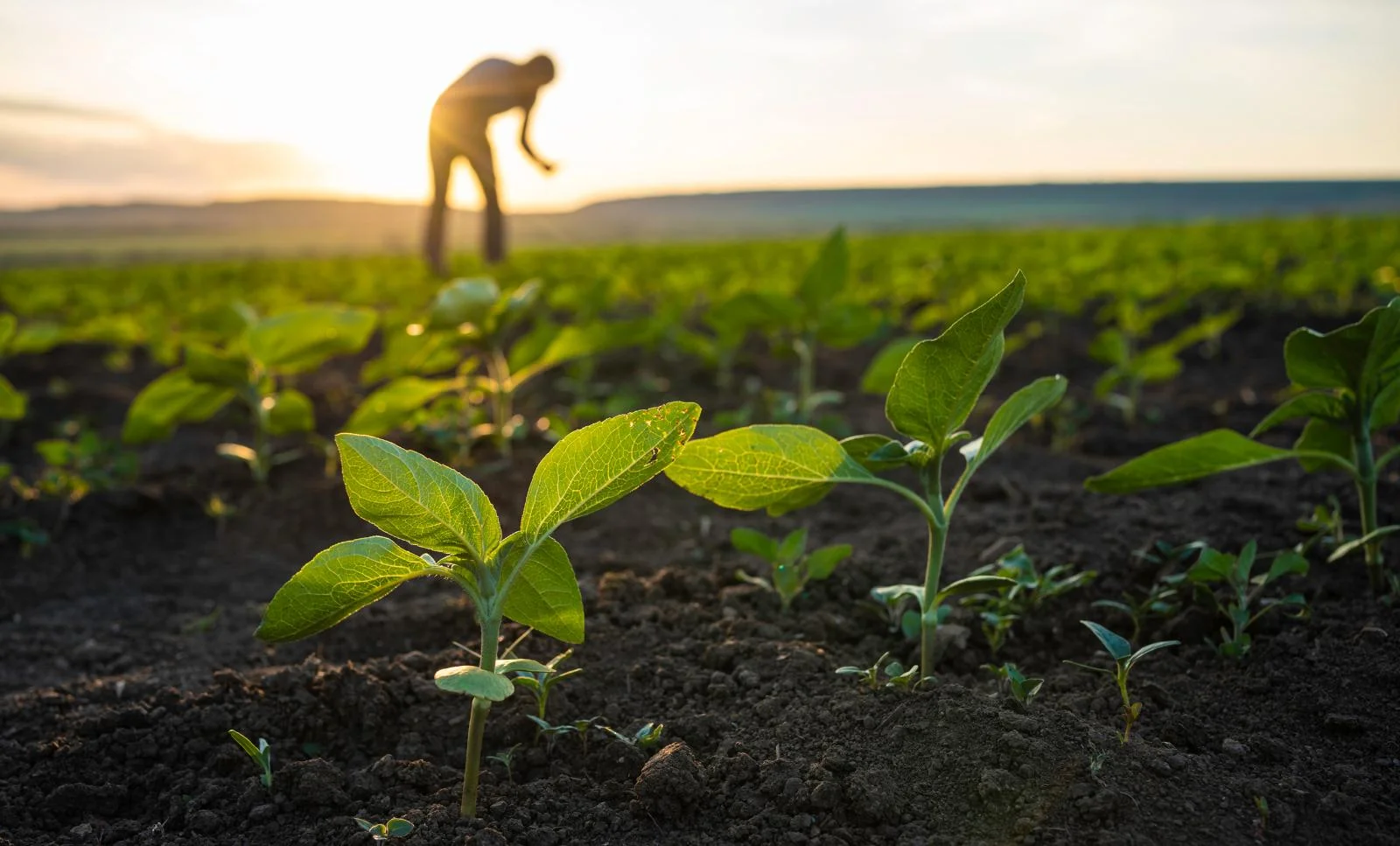
Did you know that two farmers both used biochar but got completely opposite results? Mr. Minh in Đà Lạt applied biochar to his tomato garden and the harvest increased by 45% after 2 months. Meanwhile, Mr. Tuấn in Lâm Đồng also used biochar but the plants were stunted, the leaves yellowed and yields declined. Where was the difference? The answer is the mixing ratio of biochar with organic fertilizer.
According to research by the Soil and Fertilizer Institute, using the correct ratio of biochar and organic fertilizer can increase yields by 30-50% and reduce the need for chemical fertilizers by 40%. However, 7 out of 10 Vietnamese farmers make mistakes using biochar without understanding the mixing formula suitable for each crop.
This article will provide you the golden formula - detailed guidance on the ratio of biochar and organic fertilizer for more than 15 common crops in Vietnam. You will learn how to calculate accurately, proper mixing techniques, and an effective application roadmap to optimize your garden's yield.
Why does the ratio of biochar and organic fertilizer determine the success or failure of a crop?
The real story of two farmers using biochar but with opposite results
Returning to the opening story, Mr. Minh succeeded because he understood that biochar is not a fertilizer but a soil amendment. He mixed biochar with organic fertilizer at a ratio of 1:3.5 (1 kg biochar to 3.5 kg organic fertilizer) and fermented it wet for 10 days before applying. As a result, the porous structure of the biochar fully absorbed nutrients from the organic fertilizer, creating a long-term nutrient "reserve" for the plants.
By contrast, Mr. Tuấn only spread dry biochar directly onto the soil without mixing it with organic fertilizer. The porous structure of the biochar "absorbed" all the water and nutrients available in the soil, causing the plants to suffer severe nutrient deficiency in the early stage. This is the deadly mistake that many people make.
3 common mistakes when mixing biochar that cause stunted plants and yellowing leaves
Mistake 1: Using raw untreated biochar
Freshly produced biochar has a high pH (8-10) and contains a lot of ash and dust. If applied directly, it will disrupt the soil pH balance and stress the roots. You should compost biochar with organic fertilizer for at least 7-14 days to "activate" it and balance the pH.
Mistake 2: Mixing ratios not suited to the plant type
Each plant species has different nutrient needs. Leafy vegetables require more nitrogen, so the organic fertilizer ratio should be higher (1:4), while perennial fruit trees need balanced nutrition so a 1:5 ratio is appropriate. Using one formula for all crops is a serious mistake.
Mistake 3: Applying too much biochar at once
Many people think "more is better" but in reality biochar should only make up 5-10% of the planting soil volume. Overdosing will make the soil too airy, unable to retain water, and plants are prone to wilting during the dry season.
The science behind it: Why the correct ratio is more important than using biochar alone
Biochar has a porous structure with a surface area of up to 300-500 m²/g. These pores act like "homes" for beneficial microorganisms and "storage" for water and nutrients. However, biochar itself does not contain many nutrients.
When mixed in the correct ratio with organic fertilizer, a kind of magical process occurs:
- Stage 1 (Days 1-7): Biochar absorbs water and dissolved nutrients from the organic fertilizer into its pores
- Stage 2 (Days 7-14): Microorganisms from the organic fertilizer migrate into the biochar and proliferate, forming a "microbial city"
- Stage 3 (After 14 days): The mixture is fully "activated", ready to provide stable nutrients to plants for 3-5 years
Research at Đại học Nông Lâm TP.HCM shows that a biochar-organic fertilizer mixture at a 1:3 ratio can increase water retention by 180% and nutrient retention by 250% compared to using organic fertilizer alone.
A correct understanding of Biochar and the role of organic fertilizer in the soil ecosystem
What is biochar? Porous structure and superior water and nutrient retention
Biochar is a form of charcoal produced by pyrolyzing biomass (rice husks, sawdust, rice hulls, branches) at 400-700°C in an oxygen-limited environment. Unlike coal used for burning, biochar has a special porous structure with millions of tiny pores.
Outstanding properties of biochar:
- Huge surface area: 300-500 m²/g (equivalent to 1.5 football fields from just 1 gram of biochar)
- Water-holding capacity: Absorbs and holds 2-6 times its weight in water
- Extremely high stability: Persists in soil for 100-1000 years without decomposition
- Increases CEC (Cation Exchange Capacity): Helps soil retain nutrients 40-60% better
However, newly produced biochar is like an "empty house" - it has the structure but lacks "residents" (microorganisms) and "food" (nutrients). This is why it needs to be mixed with organic fertilizer.
Organic fertilizers: A source of nutrients and beneficial microorganisms
Organic fertilizers (manure, compost, biofertilizers) provide:
- Macronutrients: Nitrogen (N), Phosphorus (P), Potassium (K)
- Micronutrients: Iron, Zinc, Manganese, Copper...
- Beneficial microorganisms: Billions of beneficial bacteria and fungi per gram
- Organic matter: Improves soil structure
The drawback of using organic fertilizer alone is that nutrients are easily leached (loss of 30-50% after heavy rain) and decompose quickly (lose effectiveness after 2-3 months).
Synergistic interaction: When biochar is combined with organic fertilizer it creates 'super soil'
When combined in the right ratio, biochar and organic fertilizer create an effect 1 + 1 = 5:
Biochar helps organic fertilizer:
- Retain nutrients from leaching (reduces losses by 60-80%)
- Protect beneficial microbes from harsh conditions
- Extend decomposition time, providing steady nutrient release
Organic fertilizer helps biochar:
- "Charge" nutrients into the porous structure
- Allow microorganisms to "settle"
- Balance pH and activate ion exchange capacity
Comparison table: Used alone vs. Properly combined
| Criteria | Only use organic fertilizer | Only use biochar | Combine at 1:3–1:5 ratio |
|---|---|---|---|
| Effective immediately | High (1-2 weeks) | Low (nutrient-deficient plants) | High (1-2 weeks) |
| Long-lasting effect | Low (2-3 months) | Very low | Very high (3-5 years) |
| Water retention | Medium | High but lacks nutrients | Very high and nutrient-rich |
| Cost per year | High (reapply 3-4 times/year) | Low but ineffective | Medium (apply 1-2 times/year) |
| Yield increase | 15-25% | 0-10% (may be negative) | 35-50% |
Golden rules for determining the Biochar - Organic fertilizer ratio
4 factors that determine the mixing ratio
1. Current soil type
- Sandy or light soils: Increase biochar ratio to 15–20% (ratio 1:2.5) to improve water retention
- Clayey, heavy soils: Keep biochar ratio at 8–12% (ratio 1:4) to improve drainage
- Balanced soil (light loam): Standard ratio 10% biochar (1:3 to 1:3.5)
2. Plant growth stage
- Seedling stage (0–30 days): Reduce biochar by 30% and increase organic fertilizer (1:5) because seedlings need quick-acting nutrients
- Vegetative growth stage: Standard ratio (1:3 to 1:4)
- Flowering and fruiting stage: Increase organic fertilizer by 20% (1:4.5) to meet higher nutrient demands
3. Crop type
- Leafy vegetables (greens): Require high nitrogen → ratio 1:4 to 1:5
- Root and fruit crops: Balanced NPK → ratio 1:3 to 1:3.5
- Perennial plants: Prioritize longevity → ratio 1:4 to 1:5
- Medicinal plants: Low ratio 1:2.5 to avoid overly vigorous growth that reduces active ingredient content
4. Climate conditions
- High-rainfall areas: Increase biochar to 12-15% to retain nutrients and prevent leaching
- Dry areas: Increase biochar to 15-20% to improve water retention
- Temperate regions: Standard ratio 10%
Basic formula: Base ratio 1:3:10
This is the "golden" formula that's easy to remember and applies to most plants:
1 part Biochar : 3 parts Organic fertilizer : 10 parts Soil
Specific example: To amend 1 m² of vegetable soil (depth 20 cm = 200 liters of soil):
- Biochar: 20 liters (about 3-4 kg)
- Organic fertilizer: 60 liters (about 30-35 kg)
- Mix evenly into the existing 200 liters of soil
Important note: This is the ratio by volume, not by weight. Biochar is very light (1 liter of biochar weighs only 150–200 g), so don't confuse the two.
How to adjust the formula for soil pH and moisture
Adjusting for pH:
- Acidic soil (pH < 5.5): Increase biochar to 15% (ratio 1:2.5) because biochar is mildly alkaline (pH 8–9) and helps neutralize
- Alkaline soil (pH > 7.5): Reduce biochar to 7% (ratio 1:4.5) and compost the biochar with organic fertilizer longer (14–21 days) to reduce pH
- Neutral soil (pH 6-7): Use the standard ratio 1:3
Adjust according to moisture:
- Dry areas, drip irrigation: Increase biochar to 15% to maximize water retention
- Waterlogged areas, wet soil: Reduce biochar to 8% and choose highly porous biochar to improve drainage
5-step checklist to determine the right ratio for your garden
Step 1: Identify the soil type (sand/clay/loam) by squeezing wet soil — if it forms a firm clump it's clay; if it falls apart it's sand
Step 2: Measure soil pH using a meter or litmus paper (sold at agricultural stores, price 50-100k)
Step 3: Identify the crop type and growth stage
Step 4: Assess climate conditions (heavy rain/drought/temperate)
Step 5: Refer to the detailed formula table below and adjust according to the four factors above
Detailed formula for short-cycle crops (vegetables and fruits)
Leafy vegetables: Ratio 1:4 and optimal application timing
Mustards, lettuce, water spinach, amaranth:
- Ratio: 1 kg biochar : 4 kg organic fertilizer (or 10 L : 40 L)
- Dosage: 2.5 kg biochar + 10 kg organic fertilizer for 10 m² of soil
- Timing of application:
- Basal application: 100% of the amount 7-10 days before sowing/planting
- No top-dressing required if the cycle is short (30-40 days)
- Reapplication cycle: Every 3 crops (6-9 months) apply an additional 50% of the initial amount
Special technique for leafy vegetables:
Leafy vegetables need a lot of nitrogen, so choose nitrogen-rich organic fertilizers such as composted chicken manure or worm castings. Mix biochar with fertilizer at a ratio of 1:4, add water to reach 60% moisture (when squeezed there are a few droplets) and compost for 10–14 days.
Note: Leafy vegetables have a short cycle so they don't need too much biochar. A 1:4 ratio ensures adequate fast-acting nutrients from the organic fertilizer and long-term effects from the biochar for subsequent crops.
Root vegetables: Formula 1:3 with a note about depth
Carrots, daikon radish, red radish, potatoes:
- Ratio: 1 kg biochar : 3 kg organic fertilizer
- Dosage: 3.5 kg biochar + 10.5 kg organic fertilizer for 10 m²
- Application depth: 25–30 cm (deeper than leafy vegetables because the roots/tubers develop deeper)
- Timing of application:
- Basal application: 80% of the amount 10 days before sowing
- Top dressing: 20% of the amount when plants are 30–40 days old (when tubers begin to enlarge)
Important technique:
For root vegetables, biochar must be mixed evenly to a depth of 25–30 cm so the roots/tubers develop well. Avoid concentrating biochar on the surface layer because the tubers will not be able to access it. Use a tiller or a deep hoe to mix thoroughly.
Yield-boosting tip: Add 10–15% rice husk ash to the biochar-organic fertilizer mix to supply potassium, helping tubers grow larger, more uniform, and crisper and sweeter.
Fruiting vegetables: Ratio 1:3.5 by growth stage
Tomato, chili, cucumber, various beans:
- Ratio: 1 kg biochar : 3.5 kg organic fertilizer
- Dosage: 4 kg biochar + 14 kg organic fertilizer for 10 m²
- Stage-based fertilization method:
Stage 1 - Seedlings (0-30 days):
- Apply 40% of the total amount into the planting hole (mix with the hole soil)
- Distance: 15 cm from the plant base
Stage 2 - Vigorous growth (30-60 days):
- Apply 40% of the total amount in a ring 20-25 cm from the plant base
- Lightly loosen the soil to mix evenly, then water
Stage 3 - Flowering and fruiting (after 60 days):
- Apply 20% of the total amount + supplement with fermented organic fertilizer (compost tea) every 15 days
Farmer's tip: For tomatoes and peppers, when the first fruits begin to ripen, apply one additional application of a biochar-organic fertilizer mix (ratio 1:4) to extend the harvest period by 1-2 months.
Summary table: Specific dosages per m² and reapplication cycle
| Vegetable type | Biochar (kg/10m²) | Organic fertilizer (kg/10m²) | Total mixture | Reapplication cycle |
|---|---|---|---|---|
| Leafy vegetables | 2.5 | 10 | 12.5 kg | 6-9 months (3 crops) |
| Root vegetables | 3.5 | 10.5 | 14 kg | 9-12 months (2-3 harvests) |
| Fruiting vegetables | 4 | 14 | 18 kg | 6 months (1-2 harvests) |
| Beans (various types) | 3 | 10.5 | 13.5 kg | 9 months (3 harvests) |
Note: The above dosage is for soil that has never been amended with biochar. From the second application onward, only 40-50% of the initial amount is required.
Detailed formula for perennial fruit trees
Citrus: 1:5 ratio and fertilization technique around the canopy ring
Orange, mandarin, grapefruit, lemon:
- Ratio: 1 kg biochar : 5 kg organic fertilizer
- Dosage by tree age:
- Trees 1-2 years: 2 kg biochar + 10 kg organic fertilizer/tree/year
- Trees 3-5 years: 5 kg biochar + 25 kg organic fertilizer/tree/year
- Trees over 5 years: 8 kg biochar + 40 kg organic fertilizer/tree/year
Fertilization technique around the canopy:
- Determine the canopy diameter
- Dig a circular trench positioned at a distance from the trunk equal to 2/3 of the canopy radius
- Trench 20-25 cm deep, 30 cm wide
- Mix the biochar-organic fertilizer mixture evenly into the trench
- Backfill with soil and water thoroughly
Application timing during the year:
- First application (February-March): 60% of total amount (after harvest, before flowering)
- Second application (July-August): 40% of total amount (fruit development stage)
Special notes: Citrus trees are very sensitive to pH. If soil pH < 5.5, increase the biochar ratio to 1:4 to improve pH. Monitor leaves — if young leaves turn yellow this may indicate iron deficiency; supplement with micronutrients.
Tropical fruit trees: 1:4 formula for fertilization during the flowering-to-fruiting stage
Mango, longan, lychee, jackfruit:
- Ratio: 1 kg biochar : 4 kg organic fertilizer
- Dosage by tree age:
- 1–3-year-old trees: 3 kg biochar + 12 kg organic fertilizer per tree per year
- 4–7-year-old trees: 6 kg biochar + 24 kg organic fertilizer per tree per year
- Trees older than 7 years: 10 kg biochar + 40 kg organic fertilizer per tree per year
Fertilization schedule by growth stage:
Post-harvest stage (July–September for lychee/longan):
- Apply 50% of the annual total
- Purpose: Restore trees and accumulate nutrients for the next season
Flowering stage (November–January for lychee/longan):
- Apply 20% of the total + supplement with phosphate fertilizer (stewed fish bones)
- Purpose: Stimulate uniform flowering
Fruit set - fruit development stage (February–May):
- Apply 30% of the total + spray fermented organic fertilizer every two weeks
- Purpose: Reduce young fruit drop, ensure fruits are uniformly large
Field experience: Mr. Phương in Tiền Giang, who manages a 1,000-tree longan orchard, applied this formula and increased yield from 8 tons/ha to 12.5 tons/ha after 2 years, while reducing chemical NPK fertilizer by 40%.
Industrial crops: Ratio 1:3 with an annual application cycle
Coffee:
- Ratio: 1 kg biochar : 3 kg organic fertilizer
- Dosage:
- Commercial coffee (over 3 years): 5–7 kg biochar + 15–21 kg organic fertilizer per tree per year
- Split into 2 applications: start of rainy season (May) and mid rainy season (August)
Pepper:
- Ratio: 1 kg biochar : 3.5 kg organic fertilizer
- Dosage: 4–6 kg biochar + 14–21 kg organic fertilizer per plant per year
- Method: Apply around the base 30–40 cm away, dig and mix evenly into the soil
Cashew:
- Ratio: 1 kg biochar : 4 kg organic fertilizer
- Application rate: 3-5 kg biochar + 12-20 kg organic fertilizer/tree/year
- Characteristics: Cashew prefers sandy loam soil; biochar helps retain water very effectively
Special notes: Adjust for mature trees, newly planted trees, and replanted trees
Newly planted trees (0-2 years):
- Reduce biochar dose by 50%
- Increase the ratio of organic fertilizer (1:5 instead of 1:3)
- Apply 15-20 cm from the base to avoid direct contact with young roots
Mature trees with declining yield (over 15-20 years):
- Increase biochar dose by 30% to rehabilitate the soil
- Combine with rejuvenation pruning
- Fertilize 3 times/year instead of 2
Replanted trees (replanting after removing old trees):
- Double the biochar dose in the first year
- Add agricultural lime (if soil is acidic) and antagonistic microbes to reduce soil-borne diseases
- Precondition the soil with biochar-organic fertilizer for 30 days before planting
Formulations for food crops and short-duration industrial crops
Paddy rice: Ratio 1:6 and method of composting biochar before flooding the field
Special formulation for paddy rice:
- Ratio: 1 kg biochar : 6 kg organic fertilizer (high ratio because rice requires a lot of nitrogen)
- Dosage: 300 kg biochar + 1800 kg organic fertilizer per 1 ha (1000 m²)
Biochar composting procedure for paddy rice:
- Days 1-3: Mix biochar with fresh organic fertilizer, add water to cover the surface
- Days 4-10: Keep covered (with a tarp), turn every 2 days
- Days 11-14: Lightly dry to 50-60% moisture
- 5-7 days before transplanting: Spread evenly over the field, harrow thoroughly
Benefits for paddy rice:
- Reduce chemical nitrogen fertilizer by 25-35%
- Reduce methane (CH4) emissions from rice fields by 40-60%
- Increase yield by 15-20% (from 5.5 tons/ha to 6.5 tons/ha)
- Improve rice quality (higher proportion of whole grains)
Field study: A trial in Đồng Tháp showed that rice fields amended with biochar had more stable yields under drought and salinity conditions and reduced fertilizer costs by 30% after three crops.
Maize and various legumes: Ratio 1:3.5 and basal-topdressing application technique
Maize:
- Ratio: 1 kg biochar : 3.5 kg organic fertilizer
- Application rate: 400 kg biochar + 1400 kg organic fertilizer/ha
- Application technique:
- Basal application (70%): Spread evenly before sowing, incorporate to a depth of 15-20 cm
- Topdressing (30%): When plants are 35-40 days old (flag/tassel stage), apply in bands 15 cm from the plant base
Soybeans and peanuts:
- Ratio: 1 kg biochar : 3 kg organic fertilizer (legumes fix nitrogen, so they need less nitrogen)
- Application rate: 350 kg biochar + 1050 kg organic fertilizer/ha
- Note: Add Rhizobium microbial inoculant (nitrogen-fixing bacteria) when mixing biochar and organic fertilizer to increase effectiveness
Tips to increase yield: Soaking corn seeds in a fine biochar solution (100 g biochar / 10 liters water) for 12 hours before sowing improves germination speed and uniformity by 20-30%.
Medicinal herbs: Special ratio 1:2.5 to increase essential oil content
Turmeric, ginger, lemongrass, peppermint:
- Ratio: 1 kg biochar : 2.5 kg organic fertilizer (lower to avoid excessive vegetative growth)
- Dosage: 4 kg biochar + 10 kg organic fertilizer for 10 m²
Scientific principle:
When medicinal plants grow too vigorously (high nitrogen) they concentrate on producing stem and leaf biomass but reduce accumulation of secondary compounds (essential oils, curcumin, gingerol...). A 1:2.5 ratio creates a "mild stress" that stimulates the plants to produce more active compounds.
Practical results: An organic turmeric farm in Hà Giang applying this formula saw curcumin content increase from 3.2% to 4.8%, with selling price rising 60%.
Timing of application:
- Apply 100% of the amount 15 days before planting
- No side-dressing (to avoid late vegetative growth)
- Reapply after each harvest (every 9–12 months)
Mixing and storage techniques for Biochar - Organic fertilizer mixture
5 proper mixing steps to allow biochar to absorb nutrients maximally
Step 1: Prepare the biochar
- Crush biochar to 0.5–2 cm size (use a sack and beat it or a grinder)
- Remove impurities and overly fine charcoal dust
- Rinse with water to remove excess ash and dust (if the biochar is newly produced)
Step 2: Dry mixing
- Spread the organic fertilizer into a 10 cm thick layer
- Evenly spread biochar on top according to the chosen ratio
- Use a shovel to mix 3–5 times until the biochar is evenly distributed
Step 3: Add water (the most important step)
- Add water slowly while mixing
- Target moisture: 60-70% (when squeezed, small droplets form but it doesn't stream)
- Water helps nutrients dissolve and penetrate the pores of the biochar
Step 4: Cover and incubate
- Pile the mixture 50-80 cm high
- Cover tightly with a tarp or plastic sheet
- Place in a cool, shaded area; avoid direct rain and sunlight
Step 5: Turn periodically
- Turn every 3-4 days
- Add water if it becomes dry
- After 7-14 days, the mixture is ready to use
Wet incubation time: The trick to 'activate' biochar before use
Why wet-incubate?
New biochar has an empty porous structure; if applied directly it will:
- Absorb water and available nutrients from the soil
- Plants will be stressed by lack of water and nutrients during the first 2-4 weeks
- Lose 30-50% of the biochar's potential
Wet incubation helps 'charge' biochar with nutrients and microbes before it goes into the soil.
Optimal incubation time:
- Minimum: 7 days (for short-season crops needing urgent use)
- Recommended: 14 days (best results)
- Maximum: 30 days (for perennial plants, to create a 'super-rich' microbial mix)
Signs the mix has been 'properly activated':
- Biochar changes from glossy black to matte black
- When gently squeezed, the biochar feels softer, no longer hard and dry
- Has a light damp-earth smell, no foul odor (if there is a foul smell it is due to anaerobic decomposition — incorrect method)
How to store the mix: temperature, humidity conditions and shelf life
Short-term storage (1–3 months):
- Store in sacks or lidded containers
- Maintain moisture at 40-50% (damp; when squeezed, no water drips out)
- Temperature: Below 35°C, avoid direct sunlight
- Inspect every 2 weeks; add water if dry
Long-term storage (3-12 months):
- Dry to 15-20% moisture
- Store in sealed bags in a dry place
- Before use, re-moisten and incubate for 3-5 days
Shelf life:
- Moist fermented mixture: 3 months (after that microbial activity drops significantly)
- Dried mixture: 12 months
- Standalone biochar: Indefinite (but should be reactivated by mixing with organic fertilizer before use)
Mistakes to avoid: 3 things you must never do when mixing
Mistake 1: Anaerobic incubation (no oxygen)
Many people cover too tightly and don’t turn the mix → creates an anaerobic environment → harmful microbes grow → the mixture becomes smelly and rotten → damages plants.
Solution: Turn the mixture every 3-4 days to provide oxygen. If it already smells, spread it out, sun-dry for 1-2 days, then incubate again.
Mistake 2: Using incompletely composted organic manure
Fresh manure (uncomposted livestock manure) contains toxic ammonia (NH3) and pathogenic bacteria. Mixing it with biochar will "lock" these toxins and can kill plants.
Solution: Only use fully composted organic manure (dark brown to black, crumbly, with no foul odor).
Mistake 3: Mixing too much at once
Many people mix tons of the mixture to store → after 3 months, most microorganisms have died → effectiveness is reduced by 50-70%.
How to fix: Mix only enough for 1–2 months. If you need more, store it dry and rehydrate before use.
Real-world case study and frequently asked questions
Case study: Organic vegetable farm increases yield by 40% after 2 seasons
Farm: Rau sạch Đà Lạt Xanh - Lâm Đồng
- Area: 2000 m² (leafy greens and fruiting vegetables)
- Duration: 12 months (4 leafy green seasons, 2 tomato seasons)
Before using biochar:
- Leafy vegetable yield: 1.2 kg/m²/season
- Tomato yield: 4.5 kg/m²/season
- Fertilizer cost: 85 million VND/year
- Problem: Acidic soil (pH 5.2), poor water retention, requiring irrigation twice a day
Applied biochar formula:
- Season 1: Apply 2.5 kg biochar + 10 kg organic fertilizer per 10 m² (1:4 ratio for leafy greens)
- Seasons 2–4: Add 50% of the initial amount
Results after 12 months:
- Leafy vegetable yield: 1.7 kg/m²/season (increased 42%)
- Tomato yield: 6.3 kg/m²/season (increased 40%)
- Fertilizer cost: 52 million VND/year (reduced 39%)
- Soil pH: Increased to 6.1 (optimal for vegetables)
- Irrigation frequency: Reduced to once a day (50% water savings)
Additional profit: 180 million VND/year (including yield increase and cost reductions)
Comments from the farm owner - Mr. Minh: "At first I was skeptical, but after the first harvest I saw the plants were unusually green and healthy. The soil became noticeably more porous and retained moisture longer. Most importantly, the vegetables had fewer pests and diseases, and the quality improved so the selling price increased by 15%."
Central Highlands coffee farm: 30% reduction in chemical fertilizers thanks to an optimized biochar formula
Coffee farm: Mr. Dũng's family - Đắk Lắk
- Area: 2 ha (2500 Robusta coffee trees, 7 years old)
- Issues: Declining yield, high NPK fertilizer costs, degraded soil
Applied formula:
- Ratio: 1 kg biochar : 3 kg organic fertilizer
- Dosage: 6 kg biochar + 18 kg organic fertilizer/tree/year
- Split into 2 applications: May (60%) and August (40%)
Results after 2 years:
| Indicator | Year 0 (before) | Year 1 | Year 2 |
|---|---|---|---|
| Yield (tons/ha) | 2.1 | 2.4 | 2.7 |
| NPK fertilizer (kg/ha) | 450 | 350 | 315 |
| Organic fertilizer (tons/ha) | 5 | 10 | 10 |
| Fertilizer cost (million VND/ha) | 42 | 38 | 35 |
| Profit (million/ha) | 65 | 82 | 95 |
Comments: In the first year yield increased by 14%, and in the second year by 29%. Notably, the coffee ripened more evenly, the proportion of faulty beans fell from 18% to 9%, and selling prices rose.
10 frequently asked questions about mixing ratios and troubleshooting
1. I applied biochar but the plants have yellow leaves — what should I do?
Cause: The biochar hasn't been "activated" and is absorbing nutrients from the soil. Remedy: Apply fermented organic fertilizer (compost tea) at 1 liter/m² each week for 3–4 weeks. Next time, charge the biochar with organic fertilizer beforehand.
2. Does a 1:3 ratio mean 1kg:3kg or 1 liter:3 liters?
It's a ratio by volume (liters:liters). If calculated by weight: 1 kg biochar ≈ 5–6 liters; 1 kg organic fertilizer ≈ 1.5–2 liters. Therefore a 1:3 ratio by volume ≈ 1:9 to 1:10 by weight.
3. Which type of biochar is best? Rice husk, sawdust, or wood?
Biochar from rice husks: cheapest, most porous, good for short-cycle vegetables. Biochar from hardwood: most durable, good for perennial plants. Biochar from sawdust: average. The important thing is that biochar must be produced at the correct temperature (400–700°C).
4. Can NPK fertilizer be used instead of organic fertilizer?
Not recommended. NPK fertilizer does not provide microorganisms or organic matter. Biochar combined with NPK only helps retain nutrients but lacks biological factors. It's best to use 70% organic fertilizer + 30% NPK.
5. I applied biochar to my soil last year; how much should I reapply this year?
Only add 30–40% of the first year's amount. Biochar persists for a long time; mainly add more organic fertilizer (ratio 1:6 to 1:8).
6. How long should the incubation be? I'm busy and can't turn it — will that be a problem?
Minimum 7 days. If you don't turn it, extend the incubation to 21 days and turn at least twice (on day 7 and day 14).
7. Does biochar lose its effectiveness? How long can it be stored?
Pure biochar can be stored indefinitely. Wet-incubated biochar-organic mixtures should only be used within 3 months (microbial populations decline after that).
8. What is a reasonable price for biochar? How can you tell if biochar is good quality?
Price: 3,000–6,000₫/kg (depending on the source). How to recognize quality: light, porous, floats in water, no burnt smell. Avoid regular charcoal (heavy, dense, sinks in water).
9. I grow organic vegetables; will using biochar cause me to lose certification?
No. Biochar is accepted by organic standards (USDA Organic, EU Organic, VietGAP). Just ensure the biochar is not contaminated with chemicals during production.
10. Can biochar be mixed with fresh manure?
Yes, but you need to compost longer (30-45 days) for the manure to fully mature. A better approach is to fully compost the manure first, then mix in the biochar and compost for an additional 14 days.
Sources to buy quality biochar and how to recognize low-quality biochar
Reputable sources:
- Local agricultural cooperatives (HTX): Often carry rice-husk biochar at good prices
- Specialist organic agricultural supply stores: Carry packaged biochar with clear provenance
- Contact biochar manufacturers directly: Cheapest, but usually require bulk orders (from 500 kg)
- Online marketplaces: Postmart, Shopee, Lazada (choose shops with good ratings)
How to identify quality biochar:
✅ High-quality biochar:
- Uniform black color
- Light, porous, and easy to break
- When placed in water: floats and releases air bubbles (a sign of porosity)
- No burnt or chemical smell
- Doesn't leave too much black dust when touched
❌ Low-quality biochar:
- Gray mixed with white (lots of ash)
- Heavy, dense, hard to break
- When placed in water: sinks immediately (not porous)
- Has a burnt or oily smell (improper pyrolysis)
- Heavily coated with black dust (ash not properly washed)
Reference prices (May 2024):
- Rice husk biochar: 3,000-4,500 VND/kg
- Mixed wood biochar: 4,500-6,000 VND/kg
- Hardwood biochar: 7,000-10,000 VND/kg
- Imported biochar: 15,000-25,000 VND/kg
Conclusion: Roadmap for applying the golden formula to your garden
Summary: Quick reference table of ratios for 15+ common plants
| Crop type | Biochar:Organic fertilizer ratio | Dosage (kg/10m² or kg/plant) | Reapplication cycle |
|---|---|---|---|
| Leafy vegetables | 1:4 | 2.5 + 10 kg/10m² | 6-9 months |
| Root vegetables | 1:3 | 3.5 + 10.5 kg/10m² | 9-12 months |
| Fruiting vegetables | 1:3.5 | 4 + 14 kg/10m² | 6 months |
| Paddy rice | 1:6 | 300 + 1800 kg/ha | Per season |
| Corn | 1:3.5 | 400 + 1400 kg/ha | Per season |
| Orange, mandarin | 1:5 | 5-8 + 25-40 kg/tree | 12 months |
| Mango, longan | 1:4 | 6-10 + 24-40 kg/tree | 12 months |
| Coffee | 1:3 | 5-7 + 15-21 kg/tree | 12 months |
| Pepper | 1:3.5 | 4-6 + 14-21 kg/tree | 12 months |
| Turmeric, ginger | 1:2.5 | 4 + 10 kg/10 m² | 9-12 months |
First 3-month roadmap: From small-scale trial to full-orchard expansion
Month 1: Small-scale trial (10-20 m²)
- Weeks 1-2: Prepare biochar and organic fertilizer, mix according to the formula
- Week 3: Incubate the mixture for 7-14 days
- Week 4: Apply to a 10-20 m² test plot and plant
- Objective: Observe initial plant response; adjust application rate if needed
Month 2: Monitoring and evaluation
- Record plant growth (height, leaf color, growth rate)
- Compare with an area without biochar (control)
- Check soil moisture and pH (if feasible)
- Adjust irrigation amount if necessary (usually reduce by 30-40%)
March: Expand or adjust
- If results are good (green trees, healthy growth): Expand to 50% of the garden area
- If results are inconclusive: Continue monitoring for another month
- If there are problems (stunted trees, yellowing leaves): Review the formula, add fermented organic fertilizer
From April onward: Apply to the entire garden
- Plan biochar application for the entire area by zones
- Prepare the required amount of biochar and organic fertilizer (buy wholesale to reduce costs)
- Apply according to each crop's proper schedule
How to monitor and evaluate effectiveness: 5 important indicators to record
1. Growth rate
- Measure plant height weekly (select 5-10 representative plants)
- Observe leaf color (dark green is good)
- Record flowering and fruit-set timing
2. Yield
- Weigh and measure harvest yields accurately
- Compare with the previous season (without biochar)
- Calculate the percentage increase/decrease
3. Input costs
- Record fertilizer costs (biochar, organic fertilizer, chemical fertilizer)
- Record irrigation water costs (if there is a meter)
- Calculate total cost per m² or cost per plant
4. Product quality
- Assess fruit size, color, and sweetness
- Ratio of Grade 1/Grade 2 products
- Average selling price (if quality is better, it will fetch a higher price)
5. Soil health
- Observe soil structure (more porous, looser?)
- Measure soil pH every 3 months
- Monitor pests and diseases (decreasing or increasing?)
- Moisture retention (does the soil dry out more slowly?)
Sample simple monitoring table:
| Week | Average height (cm) | Leaf color | Pests/diseases | Notes |
|---|---|---|---|---|
| 1 | 15 | Light green | None | Just planted |
| 2 | 22 | Dark green | None | Growing well |
| ... | ... | ... | ... | ... |
Call-to-action: Start taking action today
You now have all the knowledge about the golden formula - the biochar and organic fertilizer ratios for each crop. Now it's time to act!
3 simple steps to get started:
Step 1: Choose one crop you are growing, and look up the formula in the summary table above
Step 2: Buy quality biochar and organic fertilizer (start with a small amount for 10–20 m²)
Step 3: Mix, keep moist for 7–14 days, and apply as instructed
Your commitment to the garden: In the next 3 months, you will see a noticeable difference — greener plants, improved soil, reduced costs, and most importantly a 30–50% increase in yield.
Don't let your garden continue to be "hungry" for nutrients or waste money on ineffective fertilizers. This golden formula has been successfully adopted by thousands of Vietnamese farmers. Now it's your turn!
Please share this article with friends and family who farm. Together we can build sustainable, eco-friendly agriculture that delivers strong economic returns!
Wishing you success and a bountiful harvest! 🌱