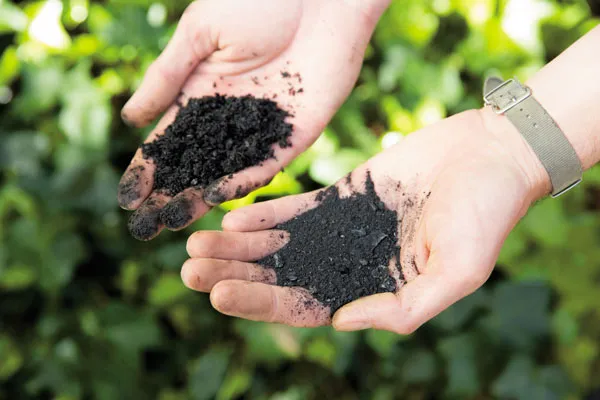
Input costs are constantly rising while agricultural prices remain volatile—this is the difficult challenge that millions of Vietnamese farmers face every growing season. Fertilizers, pesticides, irrigation water… all have been rising, eroding profits to the point where many farming households are barely breaking even or operating at a loss. Against this backdrop, biochar has emerged as a scientific solution capable of substantially and sustainably reducing farming costs. This article will provide a detailed analysis of the mechanism, actual figures, and how to properly apply biochar to optimize agricultural profits.
The Burden of Farming Costs Is Squeezing the Profits of Vietnamese Farmers
The reality of ever-rising costs for fertilizer, pesticides, and irrigation water
During the 2020–2024 period, fertilizer prices in Vietnam experienced unprecedented fluctuations. Urea prices rose from about 7,000 VND/kg to a peak of over 18,000 VND/kg in 2022, while DAP prices fluctuated from 9,000 to 22,000 VND/kg. Although prices have cooled somewhat, current levels remain 40–60% higher than pre-pandemic levels. When combined with the costs of electricity for water pumping, labor, and pesticides, the total input costs for one hectare of rice in the Mekong Delta have exceeded 25–30 million VND per crop—a figure sufficient to wipe out profits when rice prices are low.
Depleted, compacted, and degraded soil leads to lower yields despite increased investment
A paradox is unfolding in many agricultural regions: farmers are applying more fertilizer, but yields are not increasing accordingly. The root cause is degraded land — reduced porosity, acidification, depletion of the microbial community, and diminished water and nutrient retention. Applied fertilizers are washed away, evaporate, or become immobilized in the soil instead of being absorbed by plants. Fertilizer use efficiency (NUE) in Vietnam currently stands at only 30–45%, meaning that more than half of the fertilizer purchased is being wasted.
Why are traditional farming methods no longer economically competitive?
Applying lime to correct acidic soil is effective for only 1–2 growing seasons. Traditional organic fertilizers require large quantities and incur high transportation costs. Microbial fertilizers improve the microbial population but do not persist long in soil lacking a carrier. These solutions are all short-term and costly to repeat. The market needs a foundational solution—one that changes the very structure of the soil, creating cumulative benefits over time. That is why biochar is attracting attention from the global scientific and agricultural communities.
What Is Biochar and How Does It Help Reduce Farming Costs?
Definition of biochar and the anaerobic pyrolysis process
Biochar is biochar produced by pyrolyzing organic biomass (rice husks, corn cobs, wood waste, coffee grounds, etc.) under oxygen-deprived conditions — known as anaerobic pyrolysis at temperatures of 450–600°C. This process creates a stable, porous carbon structure with millions of microporous channels, and a specific surface area that can reach 200–400 m²/g. The fixed carbon content in high-quality biochar exceeds 70%, ensuring stability in the soil for hundreds to thousands of years.
High cation exchange capacity (CEC) helps retain nutrients and reduce fertilizer leaching
Biochar has cation exchange capacity (CEC) high—typically reaching 20–40 cmolc/kg depending on the feedstock and pyrolysis temperature—helps the soil retain important nutrient ions such as NH₄⁺, K⁺, Ca²⁺, and Mg²⁺ rather than allowing them to be leached away by rainwater. This is the most direct mechanism explaining why soil containing biochar requires less fertilizer to achieve the same yield.
Biochar serves as an ideal habitat for beneficial microorganisms
The porous structure of biochar creates an ideal "home" for nitrogen-fixing bacteria, mycorrhizal fungi, and phosphorus-solubilizing microorganisms. When the soil microbial community thrives, the natural nutrient cycle is enhanced—crops can access organic nutrients in the soil without the need for additional external inputs.
Mechanisms for carbon sequestration and pH neutralization in acidic soils
Biochar has an alkaline pH (typically 8–10), and when applied to acidic soil, it helps raise soil pH to a neutral range (6.0–6.5)—the optimal pH range for most crops to absorb nutrients. This reduces the cost of regular lime application and increases the effectiveness of existing fertilizers in the soil.
In-Depth Analysis: In What Areas Does Biochar Help Reduce Farming Costs?
Reduce the use of chemical fertilizers by 20–40%
Several studies by CSIRO (Australia), the Vietnam Academy of Agricultural Sciences, and Can Tho University have shown that applying biochar at a rate of 2–5 metric tons per hectare in combination with chemical fertilizers allows for reduce fertilizer use by 20–40% without reducing yields. On rice fields in the Mekong Delta, fertilizer savings amount to 3–6 million VND per hectare per crop season. With an effectiveness lasting 3–5 years, the cost of investing in biochar is spread out over time.
Save on irrigation water thanks to superior moisture retention
Above sandy soil and sloping land — which loses water quickly — applying biochar at a rate of 10–20 metric tons per hectare can increase the soil’s water-holding capacity by 20–35%. For coffee crops in the Central Highlands, where irrigation pumping costs account for 15–20% of total cultivation costs, saving 2–3 irrigation cycles per crop season can translate to 4–8 million VND per hectare per year.
Reducing the cost of remediating acidic and compacted soil
Instead of applying agricultural lime on a regular basis at a cost of 1.5–3 million VND per hectare per crop season, a single application of biochar 3–5 metric tons per hectare can maintain a stable pH for 3–5 years. The porous structure of biochar also improves aeration and reduces soil compaction, thereby lowering the costs of mechanized soil preparation.
Long-Term Crop Yield Increases: Actual ROI
A meta-analysis of 16 experiments in Vietnam and Southeast Asia shows an average increase in crop yields 10–25% in the first three growing seasons following biochar application. With agricultural biochar priced at approximately 5,000–8,000 VND per kilogram, the investment cost for 3 metric tons per hectare ranges from 15 to 24 million VND—which is typically recouped within 1–2 growing seasons.
Guide to Using Biochar Properly to Maximize Economic Efficiency
Step 1: Test the soil pH and select the appropriate type of biochar
Before applying fertilizer, you should test the soil pH. Soil with a pH < 5.5 (acidic soil) will benefit the most from alkaline biochar. Neutral or alkaline soils (pH > 7) require more careful consideration, and biochar derived from materials with a lower pH should be prioritized. Biochar from rice husks is suitable for paddy rice; biochar from hardwood or coffee grounds is suitable for industrial crops and fruit trees.
Step 2: The process of charging biochar with nutrients before application
This is a step that many farmers overlook, but it is extremely important. Raw biochar that has not been enriched with nutrients can leach N, P, and K from the soil during the first few weeks. A simple method for enrichment: mix biochar with compost or microbial fertilizer in a 1:2 ratio (by volume), keep it moist, and let it ferment for 7–14 days before application. Some advanced preparation methods use liquid manure or a dilute microbial solution to enhance effectiveness.
Step 3: Dosage, Application Method, and Timing
Biochar application focuses on the first case Apply a high dose initially, then maintain a lower dose in subsequent applications. The best time to apply is before the final tilling or in conjunction with new plantings. Spread evenly over the field surface and plow or till to incorporate it into the top 0–20 cm of soil.
Table of Biochar Application Rates and Costs by Crop Type
| Crops | Soil Type | Recommended rate (metric tons per hectare) | Fertilization Frequency | Estimated reduction in fertilizer use |
|---|---|---|---|---|
| Paddy Rice | Alkaline soil, acidic soil | 2–3 metric tons per hectare | Once per three growing seasons | 20–30% N, P, K |
| Coffee | Red basalt soil, sloping land | 5–8 metric tons per hectare | Once every 4–5 years | 25–35% less fertilizer + water savings |
| Short-season vegetables | Sandy soil, light soil | 3–5 metric tons per hectare | Once every 2–3 years | 15–25% fertilizer |
| Fruit trees (durian, avocado) | Red-yellow soil, sloping land | 5–10 metric tons per hectare | Once every 5 years | 25–40% fertilizer |
| Corn, sugarcane | Poor-quality soil, sandy soil | 3–5 metric tons per hectare | Once every three years | 20–30% N, K |
Common Mistakes When Using Biochar That Can Cost You Money and Cause Problems
Mistake #1: Applying raw biochar that has not been enriched with nutrients
Newly produced biochar has a porous surface area—it will absorb nutrients from the soil before the soil becomes saturated, causing the plants to experience a temporary nutrient deficiency during the first 2–4 weeks. Farmers who see their plants “wilt” often conclude that biochar is ineffective, when in fact it is simply because they skipped the nutrient application step. Solution: Always let biochar compost with organic fertilizer or microbial fertilizer for at least one week before applying it.
Mistake #2: Applying too high a dose in a single crop
Excessive application of biochar 20 metric tons per hectare in a single application It can raise the soil pH too high (>8.5), inhibit the activity of many soil microorganisms, and reduce the plant’s ability to absorb micronutrients such as Mn, Zn, and Fe. The principle of “small amounts applied regularly” is more effective than “a single large application.” Divide the application amount into smaller portions for each growing season if a large amount is needed.
Mistake #3: Choosing biochar of unknown origin that has been pyrolyzed at low temperatures
Biochar produced at temperatures below 350°C is not sufficient to completely break down harmful organic compounds. PAH (Polycyclic Aromatic Hydrocarbons) — a group of toxic substances — may remain in low-temperature biochar, causing harm to the soil and crops. Always require suppliers to provide certification of pyrolysis temperature (>450°C) and PAH test results in accordance with IBI or EBC standards.
Warning: Not all types of soil are immediately suitable
Natural alkaline soils (pH > 7.5) in certain areas, such as salinized coastal soils or limestone soils—the application of alkaline biochar may further disrupt the soil’s balance. Soils that are frequently waterlogged require a more thorough assessment of gas release. Have your soil tested before deciding on the type and amount of biochar.
Frequently Asked Questions (FAQ)
Does biochar really help reduce fertilizer costs, or is it just marketing?
Biochar is truly effective at reducing fertilizer use—as demonstrated by hundreds of international scientific studies and farming practices in Vietnam. However, effectiveness depends on soil type, crop type, biochar quality, and proper application practices. On acidic, nutrient-poor soils, fertilizer savings can reach 25–40%. On already fertile soils, the savings are lower but still result in cumulative benefits over the years.
How long does it take to see cost savings after the first application of biochar?
Noticeable results usually appear starting with the second crop. The first growing season is the phase during which biochar “settles” into the soil, replenishes nutrients, and activates the microbial community. Starting in the second growing season, farmers can begin reducing fertilizer application by 10–20% and observe the plants’ response. By the second or third year, the overall benefits (fertilizer + irrigation + yield) become most evident.
Is the current price of biochar worth the cost savings?
Yes, if calculated correctly over a 3–5-year lifespan. With biochar priced at 5,000–8,000 VND/kg and an application rate of 3 metric tons/ha, the investment cost is approximately 15–24 million VND/ha. Cumulative savings on fertilizer and irrigation water over three growing seasons can reach 15–25 million VND per hectare—not to mention the benefits of increased yields and improved soil quality. A positive ROI is typically achieved by the second year.
Can biochar be combined with organic fertilizer and microbial fertilizer to increase effectiveness?
It's definitely possible—in fact, this is the most recommended way to use it. Biochar serves as an ideal “carrier” for microorganisms in microbial fertilizer, increasing the survival rate and activity of bacteria after application to the soil. Blend formula: Biochar (20–30%) + mature compost (50–60%) + microbial fertilizer (10–20%). Mix thoroughly and let the blend ferment for an additional 7 days before application—this yields superior results compared to using each component separately.
Summary & Practical Tips: Using Biochar Correctly to Maximize Agricultural Profits
A Summary of the 5 Core Economic Benefits of Biochar in Long-Term Farming
- Reduce fertilizer costs by 20–40% by maintaining nutrition and improving absorption efficiency
- Save 20–35% on irrigation water on well-drained soil
- Cost of periodic lime application thanks to its ability to maintain a stable pH over the long term
- Increase productivity by 10–25% during the first 2–3 growing seasons after application
- Improving the Value of Farmland In the long run, reduce the cost of mechanized land preparation
A 3-Phase Roadmap for Implementing Biochar on Farms
Phase 1 — Testing (Season 1): Select a representative plot of 0.5–1 ha, apply nutrient-enriched biochar at the recommended rate, and monitor and record costs, yield, and soil quality.
Phase 2 — Evaluation & Adjustment (Semesters 2–3): Compare the results from the test plots with those from the control plots. Adjust the chemical fertilizer application rates based on actual observations. Calculate the actual ROI.
Phase 3 — Scaling Up (Starting in Year 2): Expand the cultivation area, implement optimized processes, and move toward low-cost, sustainable farming.
When Should You Contact a Consultant?
If you are farming on soil with complex characteristics (heavily acidic soil, salt-affected soil, steep hillside soil), or if you wish to implement biochar on a large scale—5 hectares or more—please contact an agronomist for a detailed soil analysis and to develop an appropriate fertilization plan. BiocharVN We provide technical consulting services and IBI-certified biochar products, pyrolyzed at temperatures exceeding 500°C, with transparent PAH testing—we’re ready to partner with you on your journey toward efficient and sustainable farming.


