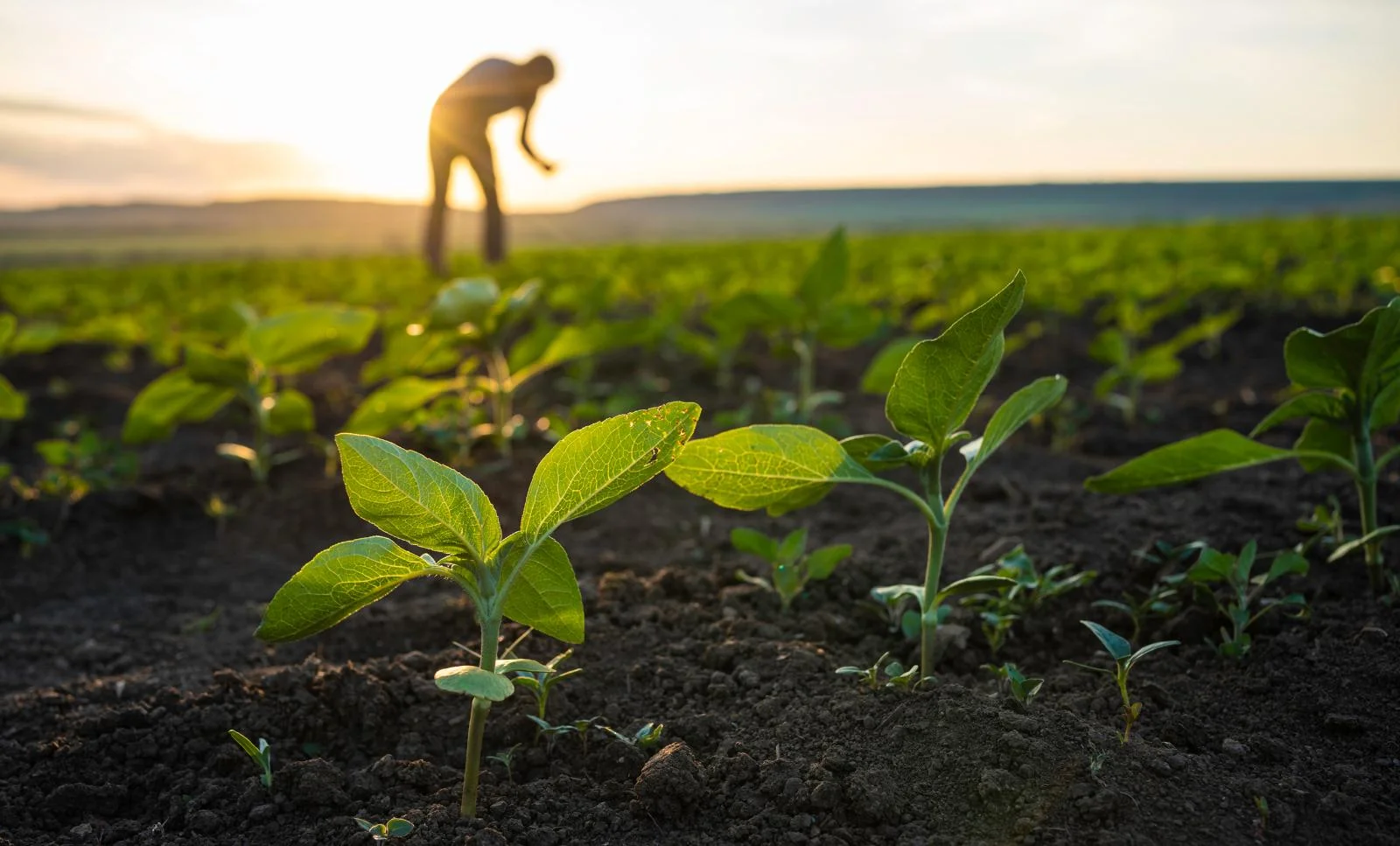
Did you know that by 2030, Vietnamese agriculture will undergo the largest revolution in its history? According to data from the Ministry of Agriculture and Rural Development, more than 60% of cultivated areas are currently using chemical fertilizers beyond recommended levels, leading to severe soil degradation. The government has set a clear direction: a comprehensive transition to green agriculture - a trend that not only protects the environment but also opens up huge economic opportunities for farmers.
In this article, we will help you clearly understand the green agriculture roadmap to 2030, the specific changes each farmer needs to prepare for starting today, along with support policies and practical conversion roadmaps. This is not only a mandatory policy requirement, but also a golden opportunity for Vietnamese farmers to increase income and assert their position in the international market.
I. Vietnamese agriculture is at a major turning point
The state of traditional agriculture: Alarming figures
Vietnamese agriculture is facing many serious challenges. According to a report by the Institute of Soil Science, more than 40% of agricultural land is being degraded due to excessive chemical use. The average NPK fertilizer use in Vietnam reaches 350–400 kg/ha/year, 2–3 times higher than technical recommendations.
Not only that, pesticide residues in Vietnamese agricultural products have repeatedly been reported to exceed allowable limits when exported to the EU and Japan. This not only affects consumer health but also reduces the value and reputation of Vietnamese agricultural products on the international market.
The direct consequence is that soil productivity and quality are gradually declining. Many monoculture rice-growing areas have developed "tired soil", requiring ever more fertilizer while yields do not increase and may even fall. Input costs are rising, but farmers' profits are increasingly squeezed.
Why is the Government determined to transition to green agriculture?
The Vietnamese Government has recognized that the traditional agricultural model is no longer sustainable. Resolution No. 10-NQ/TW of the Party Central Committee on the development of agriculture, farmers, and rural areas through 2030 clearly states: "Developing ecological, organic, and circular agriculture is a strategic orientation."
There are three main reasons driving this determination. Firstinternational commitments to reduce greenhouse gas emissions — Vietnam pledged at COP26 to a Net Zero target by 2050, under which agriculture must reduce emissions by 20% by 2030. Secondthe increasing demands of export markets for green standards and traceability. Thirddomestic demand for clean, safe food is growing rapidly at a rate of 15-20% per year.
In particular, according to data from the General Statistics Office, Vietnamese consumers are willing to pay more 30-50% for organic and green-certified agricultural products. This is a major economic opportunity that farmers should not miss.
Opportunities and challenges for farmers in the 2024-2030 period
Opportunities are wide open for those who proactively transition early. The global organic agricultural market is growing 10-12% per year, with Asia being the most promising market. Major supermarket chains such as Vinmart, Co.opmart, Lotte Mart are actively seeking stable supplies of green agricultural products with attractive purchase prices.
However, challenges are not small either. Initial conversion costs can reach 30-50 million VND/ha for land rehabilitation and changing cultivation practices. The conversion period typically lasts 2-3 years with yields possibly declining 10-20% compared to conventional farming. Many farmers still lack technical knowledge and are concerned about market risks.
But don't worry! The government and local authorities have prepared many specific support policies that we will analyze in detail in the following sections.
II. Green agriculture orientation 2030: Specific policies and targets
Legal framework and the main directive documents from the Government
The policy system on green agriculture has been built fairly comprehensively. Decision 899/QĐ-TTg on the approval of the Sustainable Agriculture Development Strategy for 2021-2030 is the most important document, providing comprehensive guidance for the transition.
Accordingly, Decree 109/2020/NĐ-CP provides detailed regulations on the management and use of fertilizers, aiming to reduce chemical fertilizer use by 20% by 2025 and 30% by 2030. Circular 27/2021/TT-BNNPTNT provides specific guidance on organic agricultural production and the certification of organic products.
In particular, The National Target Program for New Rural Development for 2021–2025 has allocated 15% of the budget (about VND 22,500 billion) to support the transition to green, organic agriculture. This is a very large resource that farmers can access.
The 5 main pillars of Vietnam's green agriculture strategy
Strategy for green agriculture to 2030 is built on 5 basic pillars:
1. Green production: Shift from chemical-intensive cultivation to ecological, organic farming. Target to reach 3% of cultivated area under organic farming by 2030 (currently only about 0.3%).
2. Green technology: Apply high technology, IoT, and AI in farm management. Develop energy-efficient and environmentally friendly mechanization.
3. Green value chains: Build linkages from production and processing to consumption in a sustainable way. Develop green branding and certification.
4. Circular economy: Reuse agricultural residues, convert waste into resources. Develop closed-loop ecological farm models.
5. Climate change adaptation: Select resilient varieties, implement effective water management, and reduce greenhouse gas emissions from agricultural activities.
Implementation roadmap by phase: 2024–2025, 2026–2028, 2029–2030
Phase 2024–2025 - Pilot and scale-up phase:
- Establish 500 model green agriculture sites in key provinces
- Train 100,000 farmers in green production techniques
- Complete the certification system and electronic traceability
- Support 70% of conversion costs for pioneering households
Phase 2026-2028 - Scaling-up phase:
- Expand organic cultivation area to 200,000 ha
- Reduce chemical fertilizer use by 20% and pesticides by 30%
- 50% of agricultural products with electronic traceability
- Establish 20 closely linked green agricultural value chains
Phase 2029-2030 - Finalization phase:
- Reach 3% of farmland under organic cultivation (about 300,000 ha)
- 80% of key agricultural products certified as green or safe
- Reduce agricultural greenhouse gas emissions by 30% compared with 2020
- Green agricultural export value reaches 10 billion USD per year
Specific indicators farmers need to know
To assess transition progress, farmers need to clearly understand the specific indicators below:
- Regarding fertilizer use: Reduce NPK fertilizer application to below 250 kg/ha/year, increase organic fertilizer share to 40-50% of total fertilizer
- Regarding pesticides: Reduce chemical pesticides by 50%, switch to biopesticides and biological traps
- Regarding irrigation water: Save 30% of water through drip and sprinkler irrigation technologies
- Regarding energy: Use solar and biomass energy to meet at least 30% of energy needs
- Regarding waste: Treat and reuse 80% of organic farm waste
III. 7 major changes farmers must start preparing for today
Change 1: Transition from chemicals to organic fertilizers and biopesticides
This is the change fundamental and most important. Instead of relying entirely on NPK fertilizers and chemical pesticides, farmers should gradually shift to using:
Organic fertilizers: Well-rotted manure, compost, microbial fertilizers. The benefits are improving soil structure, increasing humus content, and reducing long-term costs. Initially, a 50-50 mix of organic and chemical fertilizers can be used, then gradually increase the organic proportion.
Biological pesticides: Use products from microorganisms (Trichoderma, Bacillus), neem oil, and biological traps to replace chemical pesticides. Effectiveness may be 5–7 days slower but they are completely safe and leave no residues.
Specific guidance: Start by making your own compost from straw and agricultural residues. One ton of compost costs only about 500,000 - 800,000 VND, replacing 5-7 bags of NPK. Attend free training classes on organic fertilizer production organized by the Agricultural Extension Center.
Change 2: Adopt water-saving technologies and clean energy
Water and energy are two important inputs in agriculture. Water-saving technologies such as drip irrigation and sprinkler systems can reduce water use by 30-50%, while increasing yields by 15-20%.
The initial investment cost for a drip irrigation system is about 15-25 million VND/ha, but is subsidized 50% by the New Rural Development program. This system can pay back in 2-3 years thanks to savings in water, fertilizer, and increased yields.
Clean energy is also being strongly encouraged. Installing solar panels for water pumps and crop-drying systems is supported with preferential loans at 0-2%/year interest. A 3kW solar panel system (enough for 1-2 ha) costs about 60-80 million VND, saving 500,000 - 1,000,000 VND in electricity per month.
Change 3: Traceability and certification of green products
For products to be recognized as "green" and sold at higher prices, farmers need to have certification from reputable organizations. Currently there are three main types of certification:
1. VietGAP: The good agricultural practices standard of Vietnam. Certification costs about 5-10 million VND, with 70% supported by local authorities. VietGAP products command prices 10-20% higher.
2. GlobalGAP: An international standard suitable for export. Costs 15-30 million VND but opens export markets with prices 30-50% higher.
3. Organic: The highest standard, requiring strict procedures. Costs 20-40 million VND, products sell for 1.5-2 times higher.
Electronic traceability is also becoming a mandatory requirement. Platforms like VietGAP, Vietrace, Agrotech provide traceability solutions at a cost of only 500,000 - 2,000,000 VND/year. Each product will have a QR code for consumers to scan and view all information about origin and production processes.
Change 4: Shift in business mindset: From quantity to quality
This is a change in mindset the most important one. Traditional agriculture focuses on maximizing output, while green agriculture aims at quality and added value.
Instead of planting three rice crops per year with high yields but low prices, many farmers have switched to planting two organic rice crops combined with one non-rice crop. Income increased by 30-40% despite lower rice production. The secret is focusing on the premium market segment, building a brand, and connecting directly with consumers.
Some specific strategies:
- Specialize in 1-2 core products instead of growing many varieties
- Invest in attractive, professional packaging and labeling
- Build a story about your product and your farm
- Use social media (Facebook, Zalo) for direct marketing
Change 5: Value chain linkages and cooperatives
Linking is the key for smallholder farmers to compete in the green agriculture market. Joining a cooperative or farmers' group brings many benefits:
- Reduce input costs through bulk purchasing (save 10-15%)
- Access modern technology and machinery that individual farmers find hard to invest in
- Negotiate better prices with traders and supermarkets
- Easier to obtain certifications and traceability
- Receive training support and technical transfer
According to statistics, farmers who join cooperatives have incomes 25-35% higher than those producing individually. The government also prioritizes support for linkage projects, with subsidies covering up to 70% of investment costs.
Note: When joining a cooperative, you should carefully check its reputation, management capacity, and clear commitments regarding purchase prices and product off-take.
Change 6: Applying digital technology in farm management
Digital technology is completely transforming how farms are managed. Apps and IoT devices help farmers:
Remote monitoring: Soil moisture, temperature, and pH sensors automatically send alerts to phones. The price of a basic sensor kit is about 3-5 million VND.
Forecasts and alerts: Apps like Agritech and Vietgap provide free weather forecasts and disease outbreak alerts. They help farmers proactively prevent problems, reducing losses by 20-30%.
Electronic log management: Record farming practices, fertilizer use, and pesticide application on your phone. This data is crucial for certification and traceability.
Market connectivity: Agricultural e-commerce platforms like Postmart and Nông sản sạch help farmers sell directly to consumers, bypassing middlemen.
Change 7: Diversifying income and developing ecosystem services
Green agriculture doesn't stop at producing crops; it also opens up many new business opportunities:
Agritourism: Develop the farm into a visitor and experience destination. Income from tourism can account for 30-40% of total income. Initial investment is about 50-100 million VND for basic infrastructure.
Processing services: Process agricultural products into high value-added items (jam, tea, essential oils...). Increases value by 3-5 times compared to selling raw materials.
Training and consulting: After success, you can offer consulting and training services to other farmers. Income ranges from 5-10 million VND per month.
Environmental services: Participate in payment for environmental services programs (PFES) such as reforestation and watershed protection. Stable income of 2–5 million VND/ha/year.
IV. Financial support and preferential policies for farmers transitioning to green agriculture
Preferential loan packages from Ngân hàng Chính sách xã hội and Agribank
Ngân hàng Chính sách xã hội is implementing a preferential loan program with interest rates of only 0–2%/year for poor and near-poor households transitioning to green agriculture. Maximum loan up to 100 million VND/household, loan term up to 10 years.
Loan conditions are very simple:
- Have legally recognized production land
- Attend training on green agriculture
- Have a production plan approved by the Agricultural Extension Center
- No need for other assets as collateral (production land can be used as collateral)
Agribank also offers the "High-tech and Organic Agriculture" loan package with preferential interest rates 5–7%/year, loan amounts up to 1 billion VND for households and 10 billion VND for cooperatives. Loan terms flexible from 5–15 years depending on crop cycles.
In particular, Agribank also provides free technical consultancy and market linkages for loan clients. This is a major advantage that helps farmers invest with confidence.
Local programs supporting 50–70% of conversion costs
Most provinces and cities have specific support programs for farmers transitioning to green agriculture:
Supported input:
- Support 50% of the cost of purchasing organic crop seeds (maximum VND 5 million/ha)
- Support 70% of the cost of land rehabilitation and compost production (maximum VND 10 million/ha)
- Support 50% of the cost of purchasing energy-saving machinery and equipment
Training support:
- 100% free training courses on green cultivation techniques
- Support travel and accommodation costs for farmers attending training in the province
- Support 70% of the costs for study visits to models in other provinces
Certification support:
- Support 70% of VietGAP certification costs (about VND 3-5 million/household)
- Support 50% of GlobalGAP and Organic certification costs
- Free electronic traceability service for the first 2 years
Tax incentives and fee waivers for green product certification
Farmers producing green agricultural products receive many tax incentives:
- Income tax exemption from organic agricultural production activities for the first 5 years
- 50% reduction in land use tax for agricultural land used for certified organic cultivation
- Import tax exemption for machinery and equipment serving high-tech agriculture
- 0% VAT incentive for domestically produced organic fertilizers and biological pesticides
Regarding certification fees, provinces are implementing policies 50-100% fee waiver inspection and VietGAP certification fees for farmers participating for the first time. Some provinces, such as Lâm Đồng and Đà Lạt, even have separate support funds to help farmers obtain GlobalGAP certification for export.
Approach and documents required to receive support
To receive the above supports, farmers need to follow the process :
Step 1: Contact the Agricultural Extension Center or the district-level Department of Agriculture to register for the program.
Step 2: Prepare the following documents:
- Support application form (template provided)
- Land use rights certificate (copy)
- Specific production plan (prepared with support from extension officers)
- Commitment to properly follow green cultivation procedures
Step 3: Attend the mandatory training course (usually 2–3 days) on green cultivation techniques.
Step 4: Implement production and report periodically to extension officers. They will conduct field inspections and confirm for disbursement of support.
Important note: Support is usually disbursed in stages (30% after approval, 50% during implementation, 20% upon completion). Keep full receipts and procurement documents for verification.
V. Technologies and technical solutions in green agriculture
Green farming models proven in Vietnam
Vietnam has many successful models that farmers can refer to and adopt:
Ecological rice-shrimp model (Mekong Delta): Combining shrimp farming and organic rice cultivation on the same land. Shrimp provide natural fertilizer for the rice, and rice creates a habitat for the shrimp. Income: 80–120 million VND/ha/year, 2–3 times higher than traditional farming.
VAC model (Garden–Pond–Barn): A closed-loop circular system suitable for small farms. Livestock waste is used as fertilizer for the garden, and the garden provides feed for livestock and fish. Investment cost 50-80 million VND, stable income 30-50 million VND/year.
Agroforestry model (Central Highlands): Plant industrial crops (coffee, pepper) intercropped with timber and shade trees. Reduces pests and diseases, increases soil fertility, and provides additional income from timber after 7-10 years. Income increases 40-50% compared to monoculture.
High-tech safe vegetable model (Da Lat, Lam Dong): Uses greenhouses (shade houses), automatic irrigation systems, and clean growing media. Yields 3-4 times higher than conventional cultivation, products meet export standards. Investment cost 500 million - 1 billion VND/ha but payback in 2-3 years.
Applying IoT and AI technologies in green farm management
Industry 4.0 technologies are gradually becoming widespread in Vietnamese agriculture with increasingly affordable costs:
Automated irrigation system: Soil moisture sensors connected to electric valves automatically turn irrigation on/off. Saves 40% water, reduces labor by 30%. Price: 10-15 million VND/ha.
Surveillance cameras and AI for pest detection: Cameras mounted on the farm connect to smartphones, AI software automatically alerts when signs of pests or diseases are detected. Price: 5-8 million VND/set.
Spraying drones: Saves 90% of pesticide and water use, increases spraying efficiency 5-7 times. Drone spraying service rental around 200,000-300,000 VND/ha. If purchasing a drone, prices range from 50-150 million VND depending on the model.
Farm management apps: Apps like iGreen and Smart Farm help record cultivation logs, calculate costs and profits, and connect with advisory experts. Free or VND 500,000–1,000,000 per year.
Solutions for converting agricultural waste into resources
Agricultural waste is no longer a burden but can become a source of income:
Rice straw: Instead of burning it, compost it or sell it to factories producing biomass pellets. Purchase price VND 500–800/kg of dry straw. From 1 ha of rice you get 4–5 tonnes of straw, generating an additional VND 2–4 million in income.
Livestock waste: Treat with biogas to produce cooking gas and high-quality organic fertilizer. A 10 m³ biogas digester (suitable for 10–15 pigs) costs VND 15–20 million, with a 50% subsidy, saving VND 500,000–1,000,000 in gas costs per month.
Rice husks and sawdust: Turn into growing media for vegetables and mushrooms. Selling price VND 2,000–3,000/kg. Or sell to biochar manufacturers at VND 500–700/kg.
Damaged fruit and second-grade produce: Process into animal feed, biological enzymes, or foliar fertilizers. Create value from products that would otherwise be discarded.
Training and skill development for farmers: Free learning resources
There are currently many free learning resources for farmers:
Agricultural Extension Centers (at all levels): They organize free training courses on green farming techniques, machinery use, and financial management. Contact the District Agriculture Office.
Universities and research institutes: The Academy of Agriculture, the Institute of Cereal Crops, and the Institute of Fruits and Vegetables regularly provide free technology transfer. Check their websites for updates.
Online learning platforms:
- Website Khuyến nông Việt Nam (khuyennongvn.gov.vn): Hundreds of technical tutorial videos
- YouTube channel "Khoa học Kỹ thuật Nông nghiệp": Updates on new technologies
- Facebook group "Cộng đồng Nông nghiệp Xanh Việt Nam": 50,000+ members sharing experiences
Agricultural vocational training programs: 100% free for farmers, issues vocational certificates. Duration 1–3 months. Contact the District Vocational Education and Continuing Education Center.
VI. Market and business opportunities from green agricultural products
Demand for green agricultural products is rapidly increasing: Data from domestic and international markets
Domestic market is undergoing significant changes. According to Nielsen, 68% of Vietnamese consumers are willing to pay more for green, organic products. The Vietnamese organic food market reached USD 186 million in 2023 and is projected to grow 20% per year through 2030.
Major cities such as Hanoi and Ho Chi Minh City have very high demand for organic vegetables and clean fruit. Organic vegetable prices are 1.5–2 times higher than conventional vegetables but supply remains insufficient. Many supermarkets and organic store chains are willing to sign long-term contracts with farmers.
Export market has much greater potential. The EU, Japan, South Korea, and the US have very high demand for importing organic agricultural products. Vietnamese organic rice exported to the EU sells for USD 1,200–1,500/ton, 2–3 times that of regular rice. Organic vegetables exported to Japan fetch prices 3–4 times higher than the domestic market.
However, to export, you must meet strict certification standards (GlobalGAP, EU Organic, JAS) and traceability requirements. This is a challenge but also a major opportunity for those who invest properly.
New distribution channels: E-commerce and organic supermarket chains
Farmers no longer rely entirely on middlemen thanks to new distribution channels:
E-commerce: Platforms such as Postmart, Tiki, Lazada, Shopee have dedicated sections for clean agricultural products. Farmers can open shops with very low costs (0–5 million VND) and reach millions of customers. Profits are 30–50% higher than selling to middlemen.
Organic supermarket chains: Organica, Farmers Market, An Nam Gourmet, Kho Organic... are rapidly expanding and seeking stable supply sources. Purchase prices are high, payments are timely, and contracts are clear.
CSA model (Community Supported Agriculture): Farmers sign direct contracts with groups of customers, delivering vegetables/fruits on a weekly schedule. Customers pay in advance, giving farmers production capital and stable outlets. Each customer pays 800,000–1,500,000 VND/month.
Partnerships with restaurants and hotels: Many upscale restaurants and resorts are seeking stable sources of organic ingredients. Prices are good, payments are regular, and long-term relationships can be built.
Price gap between conventional produce and green/organic produce
Price gap is the largest incentive for farmers to make the switch:
- Vegetables: Conventional vegetables 15,000-25,000 VND/kg, VietGAP vegetables 25,000-35,000 VND/kg, organic vegetables 40,000-60,000 VND/kg
- Rice: Regular rice 12,000-15,000 VND/kg, clean rice 18,000-25,000 VND/kg, organic rice 30,000-50,000 VND/kg
- Fruits: Regular oranges 20,000-30,000 VND/kg, VietGAP oranges 35,000-45,000 VND/kg, organic oranges 60,000-80,000 VND/kg
- Pork: Conventional pork 80,000-90,000 VND/kg, organic pork 150,000-200,000 VND/kg
Although production costs for green agricultural products are 20-30% higher, selling prices are 50-100% higher, so profits increase significantly. Many farmers report profit increases of 40-60% after switching.
Success stories from pioneering farmers
Mr. Nguyễn Văn Thành (Đà Lạt, Lâm Đồng) - From a conventional vegetable farmer who switched to organic production:
"In 2018, I decided to convert 2 hectares of vegetables to organic. The first year was very difficult, yields dropped 30%, and many times I wanted to give up. But after receiving certification, I signed a contract with Organica and exported to Japan. Income rose from 200 million to 450 million VND/year. Now I'm expanding to 5 hectares and guiding 20 other households in the area to convert."
Ms. Trần Thị Mai (An Giang) - Organic rice model combined with duck farming:
"Previously I planted rice three crops per year, income was only 30-40 million VND/ha after costs. In 2020, I switched to two crops of organic rice, and used the remaining season to release ducks into the fields. The rice sold for 12,000 VND/kg (double the price of conventional rice), and free-range ducks sold for 120,000 VND/kg. Income increased to 80-90 million VND/ha/year, and the soil became noticeably healthier."
Rau sạch Xuân Lộc Cooperative (Đồng Nai) - Linking 50 farmer households:
"We link 50 households with a total area of 30 hectares of VietGAP vegetables. Thanks to concentrated production, we are able to negotiate favorable prices with Co.opmart and Big C. Each household earns an average income of 15-20 million VND/month, stable year-round. We also receive training and technology transfer support from the Department of Agriculture."
VII. 12-month green transition roadmap for smallholder households
Months 1-3: Assess current status and develop a transition plan
Tasks to be done:
-
Soil assessment: Take soil samples to analyze pH, nutrient content, and heavy metals. Cost 500,000-1,000,000 VND per sample at the Agricultural Extension Center.
-
Identify suitable model: Consult successful models in the area and organize study visits. Choose 1-2 main products to focus on.
-
Develop a detailed plan: Determine the area for conversion (start with 20-30% of the area), cropping calendar, and cost estimates. Ask agricultural extension officers for support.
-
Find funding sources: Submit applications for preferential loans and register to receive local support. Prepare 30-40% of the capital from own funds.
-
Participate in training: Register for training courses on organic cultivation techniques, composting, and the use of biological pesticides.
Estimated costs: 5-10 million VND (mainly for soil analysis and study visits)
Months 4-6: Pilot the green model on a small area
Tasks to be done:
-
Soil improvement: Apply lime to adjust pH, apply basic organic fertilizer 5–10 tons/ha, plant cover crops or let the land rest for 1–2 months.
-
Pilot test on 1,000–2,000 m²: Implement the full organic farming protocol, record all activities in detail.
-
Comparison with conventional farming: Keep part of the cultivated area under the original methods to compare yield, costs, and quality.
-
Build a water-saving irrigation system: Install drip lines or sprinklers for the pilot area.
-
Waste management: Construct composting pits and a biogas digester if livestock is present.
Estimated cost: 15–25 million VND/ha (50–70% subsidized)
Risks and prevention measures: Yield may drop 15–25% in the initial phase as the soil adapts. Mitigate by applying supplementary biofertilizers and enzymes to stimulate beneficial microorganisms.
July–September: Scale up and apply for certification
Tasks to be done:
-
Evaluate pilot results: Summarize yield, costs, and profits. Draw lessons for improvement.
-
Expand area: If results are good, expand to 50-70% of the total area. Apply the proven procedures.
-
Prepare certification documents: Contact VietGAP certification bodies (Quacert, Vietcert...), submit documents and register for inspection.
-
Finalize procedures and record-keeping: Create an electronic farming log, photograph procedures to support certification and marketing.
-
Initial market connections: Contact supermarkets, organic stores, and register to sell on e-commerce platforms.
Estimated costs: 20-30 million VND (area expansion + certification costs)
Key milestones: By the end of September, obtain VietGAP certification or at least have passed the first inspection.
Oct-Dec: Connect to markets and optimize efficiency
Tasks to be done:
-
Harvest and sales: Harvest the first certified products and test different distribution channels.
-
Brand building: Design a logo and attractive packaging, develop the product story. Create Facebook and Zalo pages for marketing.
-
Sign sales contracts: Negotiate and sign contracts with at least 2-3 stable buyers.
-
Optimize processes: Based on practical experience, adjust processes to reduce costs and increase productivity.
-
Plan for the next year: Conduct a comprehensive evaluation of the first year and plan expansion or product diversification for the following year.
Estimated costs: 10-15 million VND (marketing, packaging, transportation)
Expected outcomes: After 12 months, farmers should achieve:
- 50-70% of the area converted
- Have VietGAP certification
- Have at least 2 stable sales channels
- Income increases by 20-30% compared to before the transition
- Master basic green farming techniques
VIII. Conclusion: Act today to avoid being left behind
Summary of 5 priority actions farmers need to take now
After learning everything about the green agriculture roadmap to 2030, here are 5 things you need to do starting this week:
1. Contact the Agricultural Extension Center: Call or visit in person to register for the green transition program and inquire about specific local support policies.
2. Join the green farmers community: Join Facebook and Zalo groups on green agriculture to learn from those who came before.
3. Start making compost: Immediately collect straw, crop residues, and by-products to make organic compost. This is the simplest first step.
4. Small-scale trials: Choose 500–1,000 m² to trial green farming; it doesn't need to be perfect—the important thing is to start.
5. Prepare a financial plan: Calculate conversion costs, identify funding sources, and prepare documents for preferential loans.
Sources of information and support farmers can turn to
Government agencies:
- District and provincial Agricultural Extension Centers: Technical advice, policy support
- Department of Agriculture and Rural Development: Administrative procedures, certification
- Crop Production / Livestock Sub-department: Specialized technology transfer
Certification organizations:
- Quacert (quacert.gov.vn): VietGAP, organic certification
- Vietcert: GlobalGAP, international organic certification
- Control Union: Organic certification for export
Learning resources:
- Vietnam Agricultural Extension website: khuyennongvn.gov.vn
- YouTube channel "High-Tech Agriculture"
- Facebook group "Vietnam Green Agriculture Community"
Market connections:
- E-commerce platforms: Postmart.vn, "Clean agricultural products" on Tiki and Lazada
- Supermarket chains: Organica, Farmers Market
- Vietnam Organic Agriculture Association: Connecting Businesses
Vietnam's Agricultural Vision 2030: Opportunities for the Younger Generation
By 2030, Vietnam's agriculture will be completely different. It will no longer be a 'hard, low-paying' job but will become a modern, high-tech business sector with attractive incomes.
Many young people are returning to the countryside to start businesses with green, high-tech agriculture. They apply AI, IoT, online marketing, build personal brands and earn hundreds of millions of dong per year. Agriculture is becoming an attractive choice for visionary young people.
Opportunities are opening up for everyone - from older farmers with rich experience to young people with technological knowledge and new business thinking. The important thing is you must take action today, not wait until it's too late.
Transition to green agriculture is not only a policy requirement, but an opportunity for Vietnamese farmers to increase income, protect health and the environment, and strengthen their position in the international market. Start with small steps, be persistent, and you will reap success!
Take action today, so you won't be left behind in Vietnam's green agriculture revolution!