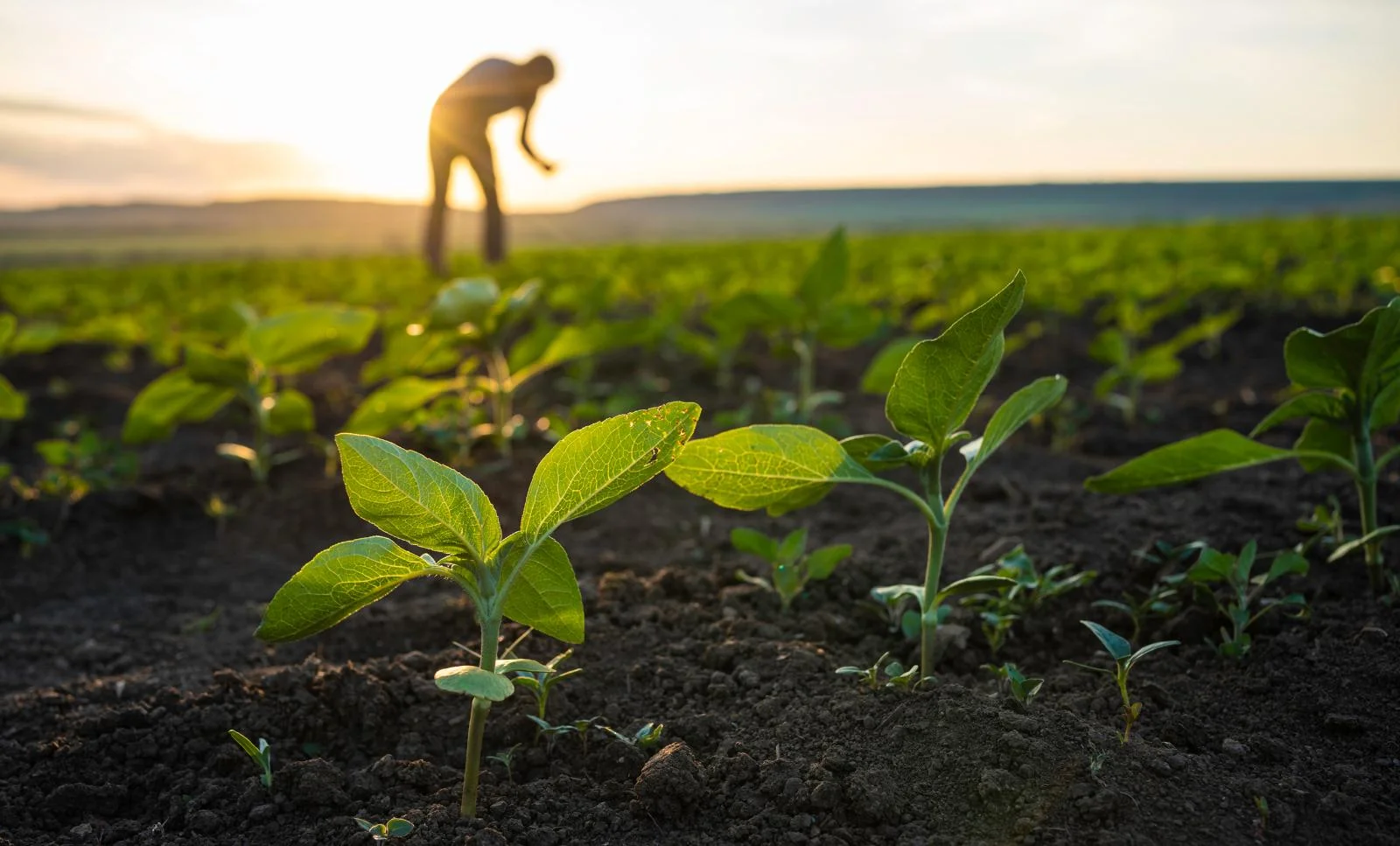
Have you ever wondered why your garden is lush and highly productive in the first year, but after a few years needs more and more fertilizer while the plants remain weak? This is the story of thousands of Vietnamese farmers facing the choice between chemical fertilizers and organic fertilizers. That decision not only affects current season yields, but also determines soil health and sustainable profitability over 5, 10, or even 20 years.
According to data from the Ministry of Agriculture and Rural Development, Vietnam is using an average of 180–200 kg of chemical fertilizer per hectare of cultivated land per year — a figure much higher than international recommendations. Meanwhile, the proportion of cultivated land that is degraded, acidified, and nutrient‑imbalanced is increasing. This is a wake‑up call that we are "squeezing" the soil for short‑term yields.
This article will help you clearly understand the nature, advantages, and disadvantages of each type of fertilizer, and — more importantly — how to choose the option that fits your long‑term farming goals. We will not stop at comparison; we will also present smart combination strategies to ensure yields while protecting valuable soil resources.
What are chemical fertilizers? Composition and mechanism of action
Definition and common types of chemical fertilizers
Chemical fertilizers, also called inorganic or mineral fertilizers, are fertilizers produced industrially from mineral raw materials or through chemical synthesis. In Vietnam, the most common chemical fertilizers include:
Nitrogen fertilizers: Urea 46%, Ammonium Sulfate (AS), Ammonium Chloride
Phosphorus fertilizers: Superphosphate, DAP (Diammonium Phosphate)
Potassium fertilizer (Potassium): Potassium chloride (KCl), potassium sulfate
Compound NPK fertilizers: NPK 16-16-8, NPK 20-20-15, NPK 30-10-10...
Each type of fertilizer is designed to supply one or more primary nutrients in specific ratios, meeting the needs of each growth stage.
Nutrient composition and specific ratios
The strength of chemical fertilizers lies in their high nutrient content and clear ratios. For example, a bag of urea 46% means that in 100 kg of fertilizer there are 46 kg of pure nitrogen. Similarly, NPK 16-16-8 contains 16% nitrogen, 16% phosphorus, and 8% potassium.
These elements exist as soluble salts or compounds that readily break down in water, allowing plants to absorb them directly without complex metabolic conversions. This is why chemical fertilizers have an "instant" effect — plants green up quickly just 3–5 days after application.
Rapid uptake mechanism in crops
When chemical fertilizers are applied to the soil, nutrient ions (NH4+, NO3-, PO4^3-, K+) quickly dissolve in the soil solution. Plant roots absorb these ions directly across cell membranes via active transport mechanisms.
This process occurs very quickly because it does not require microorganisms to decompose organic matter. Therefore, farmers often see crops "respond" immediately after applying chemical fertilizers — darker green leaves, rapid growth, and a noticeable short-term increase in yield.
Production process and origin
Chemical fertilizers are produced through complex industrial processes. For example, urea is synthesized from ammonia and CO2 at high temperature and pressure. Phosphate fertilizers are extracted from apatite ore through acid treatment. These processes consume a lot of energy and fossil feedstocks, contributing to greenhouse gas emissions.
What is organic fertilizer? Origins and biological properties
Definition and classification of organic fertilizers
Organic fertilizer is a type of fertilizer derived from animals, plants, or microorganisms, containing organic carbon and nutrients in complex forms. Common types include:
Animal manure: From livestock and poultry manure (cattle, pigs, chickens, etc.)
Compost: Composted from straw, crop residues, and agricultural by-products
Microbial fertilizer: Biological products containing beneficial bacteria and fungi
Green manure: From legumes and water hyacinth that have been decomposed/composted
Granular organic fertilizer: Commercial products manufactured from processed organic materials
Each type has its own characteristics, but they share the need for time to decompose in order to release nutrients.
Nutrient composition and organic matter
Unlike chemical fertilizers, nutrient concentrations in organic fertilizers are much lower (usually under 5% for each element). However, organic fertilizers contain:
- Organic matter (20-60%): Improves soil structure and increases water retention
- Various micronutrients: Zinc, Iron, Manganese, Copper... though in small amounts, they are balanced
- Humic and fulvic acids: Stimulate root growth and increase nutrient uptake
- Beneficial microorganisms: Millions of bacteria and fungi that help decompose organic matter and protect plants
This is a "buffet" for the soil, not only feeding the plants but also nourishing the entire soil ecosystem.
Mechanism for soil improvement and microbial nourishment
Organic fertilizer works by a "slow but steady" mechanism. When applied to the soil, microorganisms gradually decompose the organic matter, releasing nutrients slowly according to the plant's needs. This process creates:
Humus: A stable layer of organic matter that effectively retains water and nutrients
Soil colloids: Bind soil particles, creating a loose, aerated structure
Habitat for microorganisms: Feeds billions of nitrogen-fixing bacteria, phosphorus-solubilizing fungi...
As a result, the soil is not only 'fertilized' but also 'biologically revived'.
Quality assessment standards
To choose quality organic fertilizer, check:
- Maturity: The fertilizer should be well-composted, free of unpleasant odors, and have a stable temperature
- Organic matter content: At least 20-30%
- C/N ratio: Ideally 15-25:1 (if too high, it will compete with plants for nitrogen)
- Free of contaminants: Heavy metals, toxic chemicals
- Moisture content: Around 30-40%, not too wet or too dry
Quality organic fertilizer should be dark brown to black, loose and crumbly, with an earthy aroma.
Detailed comparison: 7 important criteria
1. Rate of nutrient release
Chemical fertilizers: Immediate effect (3-7 days). Plants respond quickly; suitable when you need to 'rescue' nutrients or boost growth during critical stages.
Organic fertilizer: Slow release (2–4 weeks). Nutrients are supplied steadily over the growing season, reducing the risk of sudden "shortage" or "excess".
Conclusion: If you prioritize speed and short-term yield, chemical fertilizers win. But for long-term stability, organic fertilizers are superior.
2. Impact on soil structure
Chemical fertilizers: Do not improve soil structure; may even make the soil hard, compacted, and acidic if used continuously. Soil organic matter declines over time (a study in the Mekong Delta showed a 30–40% decrease after 10 years of intensive cultivation).
Organic fertilizers: Significantly improve soil structure — increase porosity, raise water-holding capacity by 20–50%, and increase CEC (cation exchange capacity), helping to retain nutrients better.
Conclusion: Organic fertilizers are the 'architect' building the foundation for healthy soil.
3. Investment costs and economic efficiency
Chemical fertilizers: Lower initial costs (1–2 million VND/ha/crop), but application rates need to increase over the years. Fully dependent on the market; prices fluctuate widely.
Organic fertilizers: Higher initial investment (2–4 million VND/ha/crop), but decreases as the soil is restored. Can be produced from waste/by-products, significantly reducing costs.
5-year estimate: After 5 years, total costs for organic fertilizers are usually 15–25% lower than for chemical fertilizers due to reduced application rates and lower pesticide costs.
4. Environmental and health impacts
Chemical fertilizers:
- Leaching causes water pollution (eutrophication).
- Emits N₂O (a greenhouse gas about 300 times more potent than CO₂).
- Nitrate accumulation in produce, affecting consumer health.
Organic fertilizers:
- Environmentally friendly; recycles waste.
- Reduces greenhouse gas emissions.
- Safer products and higher market value (organic produce fetches 30–100% higher prices).
5. Maintaining yields across seasons
Chemical fertilizers: High short-term yields but they decline after 3-5 years if the dosage is not increased. Plants become more susceptible to pests and diseases due to biological imbalance.
Organic fertilizers: Yields gradually increase from the 2nd-3rd season onward as the soil is restored. Yields are more stable and less affected by weather conditions.
Case study: In Lâm Đồng, after 5 years of organic vegetable cultivation, yields stabilized at 85-90% compared with chemical farming, but profits were 40% higher due to higher selling prices and reduced input costs.
Long-term impacts: In-depth analysis of soil health
Soil degradation phenomena from overuse of chemical fertilizers
Continuous use of chemical fertilizers without adding organic matter leads to:
Nutrient imbalance: Soil rich in NPK but deficient in micronutrients; plants do not develop properly.
Soil acidification: pH drops from 6.5-7 to 4.5-5, causing phosphorus and micronutrients to become "locked".
Loss of structure: Soil becomes acidic and compacted; water retention capacity is reduced by 40-60%.
Decline in soil microbes: Beneficial microorganism density decreases by 70-80%, causing the soil to lose its self-regulating capacity.
According to the Institute of Soil and Fertilizer, over 30% of agricultural land in the North and 25% in the South are severely degraded.
Natural nutrient cycle with organic fertilizers
Organic fertilizers regenerate a closed nutrient cycle:
- Organic matter → Microorganisms decompose → Nutrient release
- Plant uptake → Growth → Leaf fall, root death
- By-products → Return to the soil → Continue the cycle
This cycle helps the soil "feed itself", gradually reducing dependence on external inputs.
10-year comparative yield study
A 10-year study at the International Rice Research Institute (IRRI) showed:
Farming with 100% chemical fertilizers:
- Highest yields in years 2–3 (6.5 t/ha)
- Dropped to 4.8 t/ha by year 10
- Required fertilizer doses to be increased by 30–40%
- Pesticide costs increased by 60%
Combined organic and chemical farming:
- Stable yields of 5.8–6.2 t/ha
- Reduced chemical fertilizer rates by 40%
- Pesticide costs reduced by 35%
- Net profits higher by 25%
Pest and disease resilience
Organic-rich soils have diverse microbial communities, many of which can:
- Biological antagonism: Trichoderma, Bacillus suppress fungal pathogens
- Immune stimulation: Healthier plants better protect themselves
- Ecological balance: Reduce sudden pest outbreaks
Farmers using organic fertilizers often reduce pesticide use by 30–50%.
Smart integrated strategy (IPNM)
The concept of Integrated Plant Nutrition Management
IPNM (Integrated Plant Nutrition Management) is a method that harmoniously combines nutrient sources:
- Organic fertilizer: The foundation for soil improvement
- Chemical fertilizer: Timely supplementation when needed
- Biofertilizer: Improves nutrient uptake efficiency
- Cultivation practices: Crop rotation, mulching
Objectives: High yield + Sustainability + Economic efficiency
Combination formulas by growth stage
Soil preparation stage (2-3 weeks before):
- 100% organic fertilizer: 2-3 tons/ha
- Purpose: Improve soil, increase soil microbial populations
Vegetative growth stage:
- 70% organic + 30% chemical (nitrogen-focused)
- Fertilize 2-3 times with light doses
Flowering and fruit-setting stage:
- Increase the phosphorus-potassium ratio
- 50% organic + 50% chemical
- Foliar application combined with micronutrients
Harvest stage (2 weeks before):
- Stop chemical fertilizers
- Only use liquid organic fertilizer if needed
Fertilizer allocation ratios for each crop type
Paddy rice:
- Farmyard manure: 3-4 tons/ha + NPK reduced by 30%
- Use organic basal dressing; apply chemical fertilizers for tillering and heading
Short-cycle vegetables:
- Compost: 20-30 tons/ha + NPK at 50% of the recommended rate
- Apply organic basal dressing; top-dress 1-2 times with fast-release fertilizer
Fruit trees:
- 80% organic + 20% chemical
- Apply organic fertilizer twice a year (after harvest and before flowering)
- Apply chemical fertilizers as top-dressing during the fruit set stage
Safe transition roadmap
Year 1: Reduce chemical fertilizers by 30% and supplement with 2 tons of organic fertilizer/ha
Year 2: Reduce chemical fertilizers by 50%, increase to 3-4 tons of organic fertilizer/ha
Year 3: Reduce chemical fertilizers by 70%, 5-6 tons of organic fertilizer/ha + biofertilizers
Years 4-5: Maintain or fully transition to organic if there is a market
Note: Do not reduce abruptly to avoid shock to the soil and plants.
Guidance for suitable selection
When to prioritize chemical fertilizers
✓ Intensive, short-term cultivation: Need to recover investment quickly
✓ Severely nutrient-deficient soil: Needs immediate "rescue"
✓ Important growth stages: Flowering and fruit set require strong stimulation
✓ Large area, limited organic sources: Difficult to transport and store
✓ Low-value crops: Rice, corn... no organic market yet
When to choose organic fertilizer
✓ Sustainable farming goals: Long-term mindset (5–10 years)
✓ Safe, organic vegetable production: Has a consumer market
✓ Degraded soil: Needs restoration of structure
✓ Water source areas: Environmental protection
✓ Fruit trees, perennial crops: Long-term investment
Quick decision table
| Criteria | Select Chemical | Select Organic | Combined |
|---|---|---|---|
| Goal | Short-term (<2 years) | Long-term (>5 years) | Medium-term (2-5 years) |
| Soil condition | Good, not degraded | Degraded, needs restoration | Average |
| Budget | Limited | Sufficient investment | Moderate |
| Market | Typical | Organic, premium | Flexible |
| Organic sources | None | Available | Available to buy |
5 mistakes to avoid
1. Overapplying chemical fertilizers: "More fertilizer = more fruit" is a common mistake. Excess fertilizer burns roots, pollutes, and wastes money.
2. Using incompletely composted organic fertilizer: Uncomposted manure heats the soil, competes for nitrogen, and carries pathogens.
3. Only applying NPK, forgetting micronutrients: Lack of zinc, 붕 붕 붕 causes stunted growth and poor quality.
4. Not checking soil pH: Acidic soil (pH<5) or alkaline soil (pH>8) "locks" nutrients, making them unavailable even with heavy fertilization.
5. Sudden change: Switching from chemical to organic too quickly causes a sharp drop in yields for the first 2-3 crops.
Conclusion: Make appropriate choices, not absolute ones
Summary of pros and cons
Chemical fertilizers are "sprinters" - fast, powerful, effective in the short term but not sustainable. Suitable when immediate yields are needed, but should be combined with organic inputs to protect the soil.
Organic fertilizers are "marathon runners" - slow but persistent, building a solid foundation for long-term yields. Initial investment is higher but returns are sustainable.
Smart combination is the optimal approach for most Vietnamese farms: use organic as the base (70-80%), with chemical support as needed (20-30%).
Sustainable agriculture trends
The world and Vietnam are shifting strongly toward organic, circular agriculture:
- EU commits to 25% organic land area by 2030
- Vietnam has over 80,000 ha of organic cultivation, increasing 15-20% per year
- The global organic food market reached USD 120 billion, growing 10% per year
This is a great opportunity for Vietnamese farmers to access high-end markets and increase sustainable income.
Advice for beginners
Step 1: Test the soil (pH, organic matter, NPK) at an agricultural extension station or technical center.
Step 2: Start with a 50-50 ratio of organic to chemical, and observe the results.
Step 3: Keep detailed records: fertilizer amounts, costs, yields, product quality.
Step 4: Gradually shift toward more organic and less chemical use (10-20%/year).
Step 5: Join farmers' groups to learn practical, hands-on experience.
Take action today
Don't wait until the soil is completely degraded to act. Start with small steps:
- Test on one bed or one small plot first
- Make your own compost from straw and farm residues
- Reduce chemical fertilizer by 20% next season, supplement with animal manure
- Research the local market for safe, organic vegetables
Remember: Healthy soil, healthy plants, healthy people - that is the guiding principle for sustainable agriculture. The decisions you make today will determine soil quality for future generations. Choose wisely, for your future and the future of your children and grandchildren!