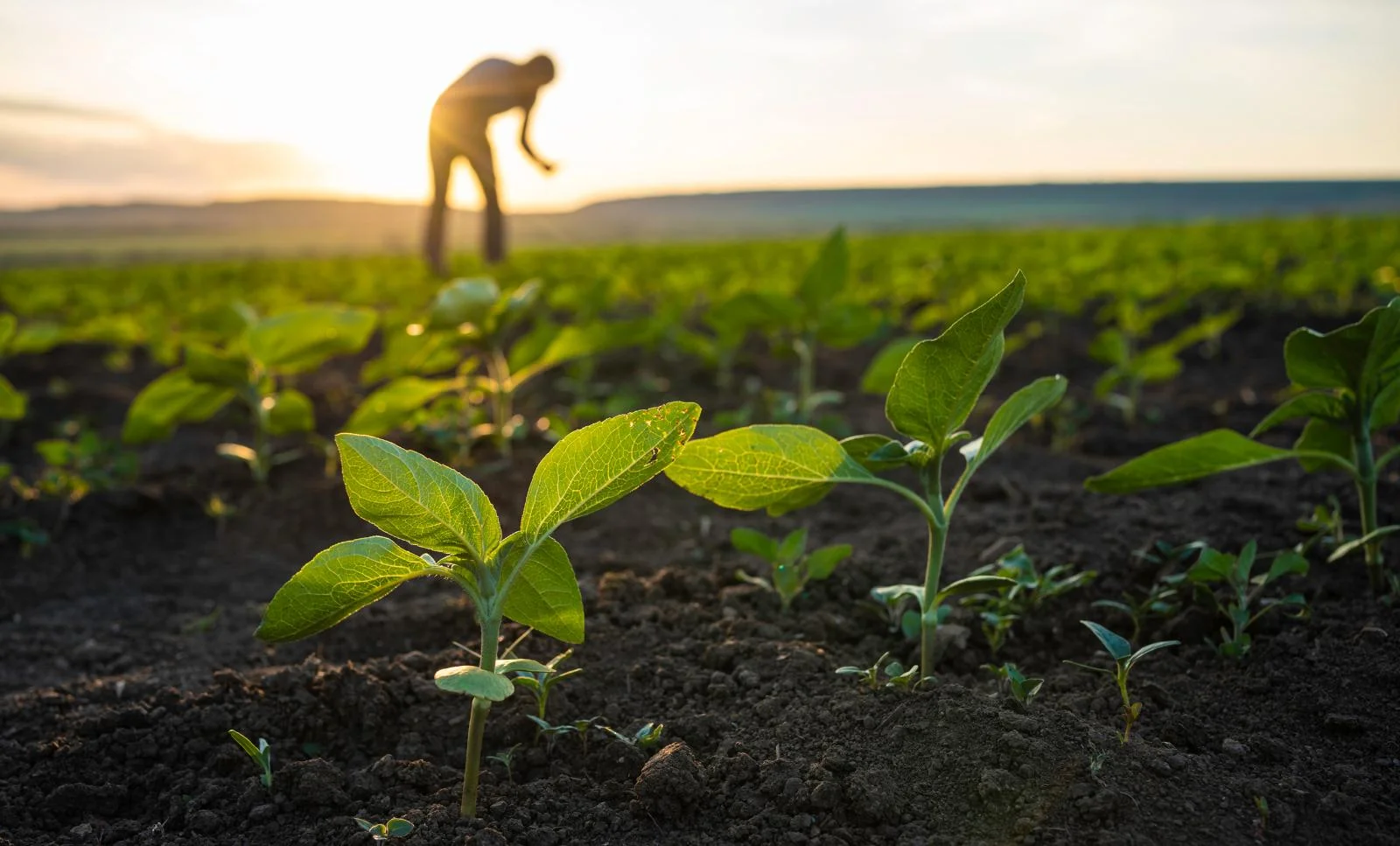
Against the backdrop of Vietnamese agriculture facing severe soil degradation, choosing an appropriate soil rehabilitation method not only affects productivity but also determines the long-term sustainability of the farm. According to data from the Ministry of Agriculture and Rural Development, nearly 60% of cultivated land area in Vietnam is degraded to varying degrees, with acidification, nutrient imbalances, and declines in organic matter content becoming widespread.
While traditional organic fertilizers such as manure and compost have been used for thousands of years, a new solution is attracting attention from the sustainable agriculture community: biochar. Nicknamed the "black gold" of agriculture, biochar promises not only effective soil rehabilitation but also contributing to reduced greenhouse gas emissions. So between biochar and traditional organic fertilizers, which choice is truly more sustainable and effective for your cultivated land?
This article will provide an in-depth analysis of the two soil rehabilitation methods, from mechanisms of action and practical effectiveness to investment costs, helping you make the right decision for your farm.
I. The Silent Revolution Beneath the Cultivated Soil
The land crisis in modern Vietnamese agriculture
Vietnamese agriculture faces a paradox: crop yields are increasing but soil quality is deteriorating. Excessive use of chemical fertilizers over the past 30 years has severely reduced soil organic matter content. Research from the Soil and Fertilizer Institute shows that the average humus content in cultivated soils has decreased from 3-4% to 1.5-2%, far below the safety threshold.
Especially in high-tech vegetable growing areas, salinization, heavy metal accumulation, and microbial imbalance are becoming urgent problems. Farmers must increase fertilizer application rates, but effectiveness is steadily declining, creating an expensive and unsustainable vicious cycle.
Why are traditional soil reclamation methods no longer sufficient?
Traditional organic fertilizers such as manure and compost still play an important role in supplying nutrients and improving soil structure. However, in the context of climate change and rising demands for sustainable yields, this approach shows many limitations.
First, traditional organic fertilizers decompose quickly, typically remaining effective for only 6–12 months and requiring frequent reapplication. Second, the decomposition process releases large amounts of CO2 and methane into the atmosphere, contributing to the greenhouse effect. Third, supplies of high-quality manure are increasingly scarce due to a decline in livestock farming, while demand for organic agriculture is growing.
Biochar - A solution from ancient Amazonian technology to modern agriculture
Biochar is not a new invention. Thousands of years ago, Amazonian indigenous people created Terra Preta (black earth) — an extremely fertile soil — by mixing biochar into the soil. To this day, Terra Preta areas still retain fertility far superior to the surrounding soils.
Today, biochar is produced using modern pyrolysis technology, transforming agricultural residues into a soil amendment material capable of persisting for hundreds of years. This opens a new path for sustainable agriculture: not only improving soil but also addressing waste management and reducing greenhouse gas emissions.
II. What Is Biochar? Core Differences Compared with Traditional Organic Fertilizers
Definition and the production process of biochar
Biochar is a form of charcoal produced by pyrolyzing biomass under oxygen-limited or oxygen-free conditions at temperatures between 300–700°C. Unlike conventional burning, the pyrolysis process does not create harmful smoke but converts carbon into a stable form.
Feedstocks for biochar are very diverse: coffee husks, rice husks, straw and stubble, peanut shells, sawdust, and even bagasse. In Vietnam, this abundant supply of feedstock is a major advantage for developing biochar production at both industrial and farm scales.
The structure of biochar resembles a "carbon sponge" with millions of ultra-small pores, creating an enormous surface area (which can reach 300–500 m²/g). This structure is what provides its superior properties for soil improvement.
Traditional organic fertilizers: Manure, compost, and characteristics
Traditional organic fertilizers include animal manure (from livestock and poultry), compost (from plant residues), and green manures. These are organic materials that have undergone natural decomposition by microorganisms, containing nutrients in organic forms that are readily available.
Manure typically contains nitrogen 0.5-2%, phosphorus 0.3-1.5%, potassium 0.5-2% depending on the type. Compost has lower nutrient content but is rich in humus, effectively helping improve soil structure. However, both have low carbon/nitrogen ratios, are easily decomposed and are lost within 6-18 months.
Differences in molecular structure and mechanisms of action
The fundamental difference between biochar and organic fertilizer lies in the carbon structure. Organic fertilizer contains carbon in a labile (easily decomposed) form, serving as an energy source for microorganisms and plants but quickly decomposing into CO2. In contrast, biochar contains carbon in a recalcitrant (decay-resistant) form, which can persist in soil for hundreds to thousands of years.
The mechanisms also differ markedly. Organic fertilizer acts like "food" — providing direct nutrition to plants and microorganisms. Biochar acts like "housing" — creating an ideal habitat for microorganisms, retaining water and nutrients, and improving the soil's physical properties.
Visual comparison table: Composition and physical properties
Comparison: Biochar vs Traditional organic fertilizer:
Criteria | Biochar | Traditional organic fertilizer
- Carbon content: 60-90% | 15-30%
- pH: 7-10 (slightly alkaline) | 6-7.5 (neutral to slightly alkaline)
- Surface area: 300-500 m²/g | 1-5 m²/g
- Water retention capacity: Increases 15-20% | Increases 5-10%
- Persistence time: 100-1000 years | 6-18 months
- N-P-K content: Low (0.5-2%) | Moderate (1-5%)
- C/N ratio: Very high (>100) | Low to moderate (15-30)
- Nutrient retention capacity (CEC): 150-300 cmol/kg | 50-100 cmol/kg
III. Soil Improvement Effectiveness: Analysis of Each Specific Criterion
Ability to improve soil structure and porosity
The porous, multi-pored structure of biochar brings significant physical changes to the soil. A study at the University of Agriculture and Forestry Ho Chi Minh City showed that adding 5% biochar to heavy clay soil reduced bulk density from 1.45 to 1.32 g/cm³ and increased porosity from 42% to 55%. This helps roots develop better, increases water infiltration, and reduces the risk of waterlogging.
Traditional organic fertilizers also improve soil structure but with shorter-term effects. As they decompose, they produce binding agents that aggregate soil particles, but this effect quickly diminishes as the organic matter is fully broken down.
Water and nutrient retention: Who is the winner?
This is where biochar truly excels. With its ultramicroporous structure, biochar can hold 3–5 times its weight in water. Under drought conditions, soil amended with biochar maintains moisture levels 15–20% higher than untreated soil, helping crops better withstand drought.
Biochar's cation exchange capacity (CEC) is 2–3 times higher than that of organic fertilizer, meaning it retains nutrient ions like NH4+, K+, Ca2+, and Mg2+ more effectively, reducing leaching losses. A trial in Lâm Đồng showed that soil amended with biochar reduced nitrogen leaching by 40% compared to using only organic fertilizer.
However, organic fertilizer has the advantage of providing nutrients directly. It contains higher levels of N-P-K and in more readily available forms, meeting crops' short-term nutrient needs better than biochar.
Enhancing beneficial microbial activity
Both have positive effects on soil microorganisms but in different ways. Organic fertilizer is a direct food source for microorganisms, stimulating decomposition activity and rapid nutrient cycling. However, when the supply of labile carbon is exhausted, microbial populations also decline.
Biochar creates an ideal "home" for microorganisms. Its porous structure protects bacteria from environmental fluctuations, helping maintain stable populations over the long term. Research shows soil with biochar has 20-30% higher microbial density and greater species diversity.
The optimal solution is to combine both: biochar provides habitat, organic fertilizer supplies food, creating a balanced and sustainable microbial ecosystem.
Ability to adjust pH and reduce soil toxicity
Biochar is mildly alkaline (pH 7-10) so it is especially effective with acidic soils — a common problem in Vietnam. Adding 3-5% biochar can raise the pH of acidic soils from 4.5-5.0 to 5.5-6.5, reducing the toxicity of soluble aluminum and manganese and improving plants' nutrient uptake.
Biochar also has the ability to adsorb heavy metals (lead, cadmium, mercury) and harmful substances such as residual pesticides, reducing the risk of accumulation in crops. A study in cadmium-contaminated soils in Thái Nguyên showed biochar reduced cadmium content in leafy vegetables by 50-60%.
Organic fertilizer also helps improve pH but to a lesser and less sustainable degree. Its toxicity-reducing effect mainly occurs by enhancing the activity of microbes that break down contaminants.
Duration of effectiveness in soil
This is the biggest difference. Traditional organic fertilizers have a short effective cycle and need to be reapplied every 6–12 months. This is good for providing continuous nutrients but costly in terms of expense and labor.
Biochar has an extremely long "lifespan." Carbon-dating studies show that biochar in Terra Preta, aged 500–2,500 years, still retains its properties. Under real-world farming conditions, biochar maintains effectiveness for at least 5–10 years with a single application, creating a foundation for long-term soil restoration.
However, it should be noted that biochar does not completely replace organic fertilizers because it does not provide sufficient nutrients. The optimal strategy is to use biochar as a long-term "foundation" combined with organic fertilizers to supply short-term nutrients.
IV. Environmental Sustainability: A Long-Term Perspective
Carbon sequestration and reducing greenhouse gas emissions
This is biochar's most prominent environmental benefit. When biomass decomposes naturally or is burned, all of the carbon returns to the atmosphere as CO2. But when it is pyrolyzed into biochar, 50–70% of the carbon is "locked" in a stable form in the soil for hundreds of years.
Estimated calculations indicate that each ton of biochar can sequester the equivalent of 2.5–3 tons of CO2. If Vietnam converts 30% of agricultural residues into biochar, it could sequester about 5–7 million tons of CO2 per year, making a significant contribution to the Net Zero 2050 commitment.
Traditional organic fertilizers, although better than chemical fertilizers, still release CO2 and CH4 (methane — a greenhouse gas roughly 25 times more potent than CO2) during decomposition. Especially under waterlogged conditions like rice paddies, organic fertilizers produce significant methane emissions.
Circular cycle: From waste to resource
Vietnam emits more than 80 million tons of agricultural residues each year, most of which are burned or discarded into the environment. Converting them into biochar not only addresses pollution but also creates a product with high economic value.
This circular economy model is particularly suitable for agricultural processing areas: a coffee factory can convert eggshells into biochar to sell to coffee farmers; a rice mill can turn rice husk into biochar for paddy fields. This creates a closed value chain, reduces transportation costs and increases income for the community.
Organic fertilizer is also a circular solution but requires large composting areas, a long time (2–6 months) and can easily cause pollution if not well controlled.
Impact on groundwater and ecosystems
The nutrient-retention capacity of biochar significantly reduces the amount of nitrate and phosphate washed into water bodies, limiting eutrophication of rivers and lakes. Research in the Mekong Delta shows that soils with biochar reduce nutrient losses to canals and waterways by 35–45%.
Reducing irrigation needs thanks to biochar's water-holding ability also helps preserve groundwater, which is especially important in the context of worsening water scarcity.
Excessive use of organic fertilizer can pollute water sources due to high nitrogen and phosphorus content; in particular, inadequately composted manure may contain E. coli bacteria and antibiotics from livestock farming.
Carbon footprint in production and transportation
Producing biochar using modern pyrolysis technology has a low carbon footprint, even "negative carbon" if accounting for the carbon sequestered in the soil. The thermal energy from the pyrolysis process can be recovered to generate electricity or dry agricultural products, increasing overall energy efficiency.
However, attention must be paid to feedstock origin and production technology. Biochar from inefficient homemade kilns can produce toxic smoke and waste energy. Transporting biochar from far away also increases the carbon footprint, so on-site or near-site production is optimal.
Organic fertilizer has a lower carbon footprint if produced on-site, but if it must be purchased from afar transportation costs are high due to large volumes and high moisture content (40-60%).
V. Cost-Benefit Analysis: Which Investment Is More Effective?
Initial production/purchase cost of raw materials
Traditional organic fertilizers:
- Farmyard manure: 500,000-800,000 VND/ton (purchased), or free if produced on-site from your own livestock
- Compost: 300,000-600,000 VND/ton (purchased), or 100,000-200,000 VND/ton if self-composted
- Transport cost: 200,000-500,000 VND/ton depending on distance
Biochar:
- Purchased: 3,000,000-6,000,000 VND/ton (high-quality biochar)
- Self-produced: 1,500,000-2,500,000 VND/ton (including feedstock and fuel)
- Investment in a small-scale pyrolysis kiln: 15-30 million VND (capacity 50-100 kg/batch)
At first glance, biochar is 4-10 times more expensive, but dosage and application frequency must be taken into account.
Application rates and re-application frequency
Organic fertilizers:
- Dosage: 10-20 tons/ha/year for vegetable land, 5-10 tons/ha/year for perennial crops
- Frequency: Each crop season or 2-3 times/year
- Annual cost: 5-16 million VND/ha
Biochar:
- Initial dosage: 5-10 tons/ha (one-time)
- Maintenance top-up: 1-2 tons/ha every 3-5 years
- Initial cost: 15-60 million VND/ha
- Maintenance cost: 3-12 million VND/5 years
For small areas (1 sào = 360 m²), the initial biochar cost is about 5-20 million VND, while organic fertilizer is about 2-6 million VND/year.
Long-term economic benefit calculation (5-10 years)
Scenario 1: Vegetable land (1000 m²)
Option A - Organic fertilizer only:
- 5-year cost: 15 million VND x 5 = 75 million VND
- Yield increase: 15-20%
- Chemical fertilizer savings: 30%
Option B - Biochar + organic fertilizer reduced by 50%:
- Initial cost: 50 million VND (biochar) + 7.5 million VND (organic fertilizer) = 57.5 million VND
- Cost for the next 4 years: 7.5 million VND x 4 = 30 million VND
- Total 5 years: 87.5 million VND
- Yield increase: 25-35%
- Chemical fertilizer savings: 50%
- Irrigation water savings: 20-30%
Although the cost is 12.5 million VND higher in the first 5 years, from year 6 onward Option B is significantly more economical because reapplying biochar is not required.
Break-even point and realistic ROI for small farms
Based on calculations from pilot models, the break-even point for biochar investment is typically reached after 3–4 years for short-term crops and 2–3 years for perennial crops.
Real-world example - 5,000 m² coffee plantation:
- Initial biochar investment: 100 million VND
- Yield increase: 20% (from 2 tons to 2.4 tons)
- Average coffee price: 50,000 VND/kg
- Increased revenue: 20 million VND/year
- Savings on fertilizer and water: 8 million VND/year
- Total benefit: 28 million VND/year
- Payback period: 3.5 years
From the 4th year onward, net profit increases by 28 million VND/year without additional biochar investment.
VI. Practical Application: When to Choose Biochar, When to Choose Organic Fertilizer?
Sandy soil, alluvial soil, red basalt soil: Recommendations by soil type
Sandy soil (Binh Thuan, Ninh Thuan):
- Issue: Poor water and nutrient retention
- Recommendation: Biochar is the optimal choice (5-10 tons/ha)
- Combination: Biochar + organic fertilizer at 30% of the usual rate
- Effectiveness: Increases water retention by 40-60%, reduces nutrient leaching by 50%
Alluvial soil (Mekong Delta, Red River Delta):
- Issue: Naturally high fertility but prone to erosion and lacking organic matter
- Recommendation: Traditional organic fertilizer remains effective (10-15 tons/ha/year)
- Supplement biochar: 2-3 tons/ha to improve long-term structure
- Effectiveness: Maintains fertility, reduces erosion
Red basalt soil (Central Highlands):
- Problems: Acidic, aluminum toxicity, phosphorus fixation
- Recommendations: Biochar combined with lime (5–7 tons biochar + 1–2 tons lime/ha)
- Organic fertilizer: Use as usual (5–10 tons/ha)
- Effects: Increase pH, reduce aluminum toxicity by 60–70%, improve phosphorus uptake
Heavy clay soil (Northern Vietnam):
- Problem: Compaction, poor drainage, difficult to work the soil
- Recommendations: Biochar is a breakthrough solution (7-10 tons/ha)
- Combine: Organic fertilizer at 50% of the normal rate
- Effect: Improves soil aeration by 40-50%, easier to till, better root development
Depends on crop type and farming objectives
Short-cycle leafy vegetables (mustard greens, water spinach, lettuce):
- Preferred: Organic fertilizer (provides quick nitrogen)
- Biochar: Add 20-30% to reduce leaching and improve long-term soil quality
Perennial fruit crops (coffee, durian, pomelo):
- Preferred: Biochar (one-time investment, long-term benefits)
- Organic fertilizer: Apply annually at a reduced rate of 30-50%
Paddy rice:
- Preferred: Traditional organic fertilizer
- Biochar: Use with caution (may increase methane emissions if used improperly)
- Recommendation: Biochar + proper water management (AWD - Alternate Wetting and Drying)
Premium organic agriculture:
- Preferred: Combination of biochar + high-quality compost
- Goals: Increase product value, obtain carbon credits certification
Combined solution: Biochar + organic fertilizer = optimal results
Research and practice show that combining biochar with organic fertilizer delivers superior results compared to using either alone. Recommended mixing formula:
Formula 1 - For nutrient-poor soils:
- Biochar: 5 tons/ha
- Well-composted manure: 10 tons/ha
- Compost: 3 tons/ha
- Mix thoroughly before applying
Formula 2 - For acidic soils:
- Biochar: 7 tons/ha
- Lime powder: 1 ton/ha
- Organic fertilizer: 8 tons/ha
- Apply lime + biochar two weeks before, then apply organic fertilizer
Formula 3 - Maintenance after a base layer of biochar is present:
- Organic fertilizer: 5-7 tons/ha/year (40-50% reduction compared to no biochar)
- Supplemental biochar: 1-2 tons/ha every 3-5 years
Notes for first-time use and mistakes to avoid
5 Common mistakes when using biochar:
-
Using "fresh" unactivated biochar: Newly produced biochar has few surface functional groups and poor nutrient retention. It needs to be "activated" by soaking in a liquid organic fertilizer solution or rice-washing water for 7-10 days before use.
-
Applying biochar without nitrogen fertilizer: Biochar has a high C/N ratio and can immobilize nitrogen in the initial stage. Add an extra 20-30% nitrogen in the first year.
-
Using biochar made from unknown feedstock: Biochar produced from painted wood, plastics, or industrial waste may contain heavy metals and harmful chemicals.
-
Applying too deep or too shallow: Applying biochar too deep (>30 cm) is wasteful, too shallow (<5 cm) is prone to being washed away. Optimal depth: 10-20 cm.
-
Expecting immediate effects: Biochar requires 3-6 months to fully take effect as microorganisms establish. Do not evaluate effectiveness after a single short season.
Proper procedure for using biochar:
- Choose quality biochar (from rice husks, coffee husks, sawdust) or produce it yourself
- Activate biochar with liquid organic fertilizer for 7-10 days
- Mix biochar with organic fertilizer at a ratio of 1:2 to 1:3
- Spread evenly on the soil surface then mix into the topsoil to a depth of 10-20 cm
- Water thoroughly to stabilize the biochar
- Apply 20-30% more nitrogen fertilizer in the first year
- Monitor and adjust fertilizer dosages according to crop response
VII. Case Study: Real-World Experiences from Vietnamese Farmers
Biochar model at an organic farm in Đà Lạt
The organic vegetable farm of Mr. Nguyễn Văn Minh (5000 m² in Đà Lạt) had acidic soil (pH 4.8) and low yields despite heavy use of organic fertilizer. In 2020 he decided to invest in a biochar trial on 1000 m².
Procedure:
- Apply 5 tons of coffee-husk biochar per hectare (500 kg for 1000 m²)
- Combined with 5 tons of compost per hectare (a 50% reduction compared to before)
- Investment cost: 15 million VND for 1000 m²
Results after 18 months:
- pH increased from 4.8 to 5.9
- Vegetable yields increased by 28%
- 40% reduction in irrigation water use
- Saved 35% on fertilizer costs
- Better vegetable quality (crisper, sweeter, fewer pests and diseases)
Lessons learned: Mr. Minh expanded it to the entire 5000 m² and now produces biochar himself from local coffee waste, reducing costs to 60%.
Comparison of organic rice yields: Traditional fertilizer vs Biochar
Study by the Mekong Delta Rice Institute (2019-2021) on 3 ha of organic rice in An Giang:
Plot 1 - Traditional organic fertilizer (control):
- Manure: 10 tons/ha
- Straw (rice straw): 5 tons/ha
- Yield: 4.2 tons/ha
- Fertilizer cost: 12 million VND/ha/season
Plot 2 - Biochar + reduced organic fertilizer:
- Biochar (first application): 5 tons/ha
- Manure: 5 tons/ha (50% reduction)
- Straw (rice straw): 3 tons/ha
- Yield in season 1: 4.0 tons/ha (decreased 5%)
- Yield in season 2: 4.5 tons/ha (increased 7%)
- Yield in seasons 3-4: 4.7 tons/ha (increased 12%)
Analysis: Biochar needs time to take effect in paddy rice. Clear effects appear from the second season onward. It is important to combine it with AWD water management to avoid increasing methane emissions.
Experience from a coffee farm in the Central Highlands
Mr. Trần Văn Hùng (2 ha coffee farm in Đak Lak) faced acidic basalt red soil and declining yields despite heavy fertilizer use. In 2018 he joined the province's biochar pilot program.
Application plan:
- Year 1: Apply 6 tons of biochar + 1 ton of lime/ha
- Organic fertilizer: Reduced from 10 tons to 6 tons/ha
- Investment: 120 million VND for 2 ha
Results after 3 years:
- Yield increased from 1.8 to 2.3 tons/ha (an increase of 28%)
- Soil pH increased from 4.5 to 5.5
- Plants greener, fewer yellow leaves
- Saved 30% of irrigation water (important during the dry season)
- Total additional profit: 80 million VND/year
- Payback after 1.5 years
Lessons: Mr. Hùng shared: "At first I hesitated because biochar was expensive, but now I see the investment was well worth it. The coffee is healthier, more drought-tolerant, and importantly I don't have to apply biochar every year like farmyard manure."
Lessons learned and recommendations
From real case studies, the following key lessons were drawn:
- Begin on a small scale: Test on 10-20% of the area before expanding
- Combination is key: Biochar + organic fertilizer are more effective than using them separately
- Patience: Allow at least 2-3 growing seasons to fully assess effectiveness
- Choose a reputable supplier: Low-quality biochar can be counterproductive
- Learn and adjust: Each soil type and crop requires different dosages and application methods
VIII. Conclusion: A Smart Choice for a Sustainable Future
Summary of the advantages and disadvantages of each method
Traditional organic fertilizer:
Advantages:
- Low initial cost, easily accessible
- Provides a diverse range of nutrients quickly
- Familiar techniques, easy to apply
- Suitable for short-duration crops
Disadvantages:
- Requires frequent application, labor-intensive
- Short-term effectiveness (6-12 months)
- Emits greenhouse gases during decomposition
- Supply is inconsistent in quality
Biochar:
Advantages:
- Long-term effectiveness (5–10 years or more)
- Sustainably improves soil structure
- Sequesters carbon, reduces greenhouse gas emissions
- Conserves water and reduces nutrient runoff
- Suitable for perennial crops and premium organic agriculture
Disadvantages:
- High initial investment cost
- Requires technical knowledge to use effectively
- Does not provide sufficient nutrients; needs to be combined with fertilizers
- Quality depends on origin and production process
Trends in sustainable agriculture and the role of biochar
Global agriculture is shifting strongly toward sustainability, regenerative agriculture, and carbon neutrality. In this context, biochar is not only a soil amendment but also an important tool in emissions reduction strategies.
The carbon credit market is developing, where farmers can sell carbon credits from using biochar. Some countries, such as Australia and the U.S., already have programs that pay farmers for sequestering carbon with biochar, creating additional income.
With its Net Zero 2050 commitment and abundant agricultural residues, Vietnam has great potential to develop a biochar industry that both addresses environmental issues and increases agricultural productivity.
Roadmap for transitioning from traditional fertilizers to biochar
Year 1 - Pilot phase:
- Select 10-20% of the area for trials
- Apply 5–7 tons/ha of biochar combined with a 30–50% reduction in organic fertilizer
- Monitor and record carefully
- Participate in training courses and exchange experiences
Years 2–3 - Expansion phase:
- If results are good, expand to 50–70% of the area
- Adjust application rates according to each area
- Consider producing biochar on the farm to reduce costs
- Develop a circular (closed-loop) model on the farm
Year 4 onwards - Stabilization phase:
- Apply across the entire area
- Only need to add 1–2 tons/ha of biochar every 3–5 years
- Optimize the mixing/formulation
- Share experiences and become a demonstration model
Quality biochar suppliers in Vietnam
Reputable suppliers:
- Biochar Việt Nam Co., Ltd. (Đồng Nai): Specializes in biochar from rice husks and coffee husks
- Hoàng Long Ecological Farm (Lâm Đồng): Organic biochar for vegetables and fruit trees
- Xanh Tây Nguyên Agricultural Cooperative (Đak Lak): Specialized biochar for coffee
- Center for Sustainable Agricultural Research (Cần Thơ): Consulting and supplying biochar for the Mekong Delta
Guide to small-scale biochar production:
If you have ready feedstock (rice husks, coffee husks, sawdust), you can produce biochar yourself using a simple kiln:
- 200-liter drum kiln: Cost 2-3 million VND, capacity 30-50 kg per batch, suitable for small gardens
- Kon-Tiki kiln: Cost 5-8 million VND, capacity 100-200 kg per batch, more efficient
- TLUD (Top-Lit UpDraft) kiln: Cost 10-15 million VND, capacity 50-100 kg per batch, low smoke
Note: Biochar production must comply with environmental regulations to avoid air pollution.
Call to action
Choosing between biochar and traditional organic fertilizer is not 'either-or' but 'and'. Smartly combining both methods will deliver optimal results: biochar provides a long-term sustainable foundation, while organic fertilizer supplies short-term nutrients.
If you cultivate perennial crops, have a long-term perspective, and care about the environment, biochar is a worthwhile investment. If you grow short-cycle crops and have limited capital, continue using organic fertilizer but gradually experiment with biochar on a small scale.
The most important thing is to start taking action today. Your soil is your most valuable asset; investing properly in the soil will bring long-term benefits for both your family and the planet. Be a smart farmer — choose sustainable solutions for the future!